


Welcome to AI Health Uncut, a brutally honest newsletter on AI, innovation, and the state of the healthcare market. If you’d like to sign up to receive issues over email, you can do so here.
I’ve done a lot of flying over the past two weeks — 14 flights in total, averaging one per day. 🙂 On my very last flight from Copenhagen to Vilnius, something broke mid-air, and we had to turn back to Copenhagen. I guess when you fly that much, sooner or later something like that is bound to happen. 😉

I wanted to briefly share my experiences from two major healthcare conferences: HLTH in Las Vegas (where I attended as an “influencer” 🙄), and the Health AI Summit in Albuquerque (where I was honored to be invited as a speaker).
But first, if you happen to be in beautiful Vilnius, Lithuania (because honestly, why would you be anywhere else? 😉) next Wednesday, November 12, I’d love for you to join me at the Health2Tech event, where I’ll be giving a talk titled “AI vs Reality: Why Healthcare Innovation Is Still 20 Years Behind.” You can sign up here.
HLTH in Las Vegas
So I came to HLTH as an influencer 🙂 Which basically meant doing a lot of “influencing” with my good friend Alex Koshykov — mostly for our podcast Digital Health Inside Out. The HLTH episode drops soon, so stay tuned.
For me, the real action wasn’t on stage. It was in the halls, lounges, and late-night meetups — reconnecting with old friends and making new ones. That’s what HLTH is really about.
I glanced at a few panels, and honestly, they were disappointing. Panelists were throwing out claims left and right with zero pushback. Moderators just nodded along, glued to their scripts, afraid to challenge anyone. What’s the fcking point?
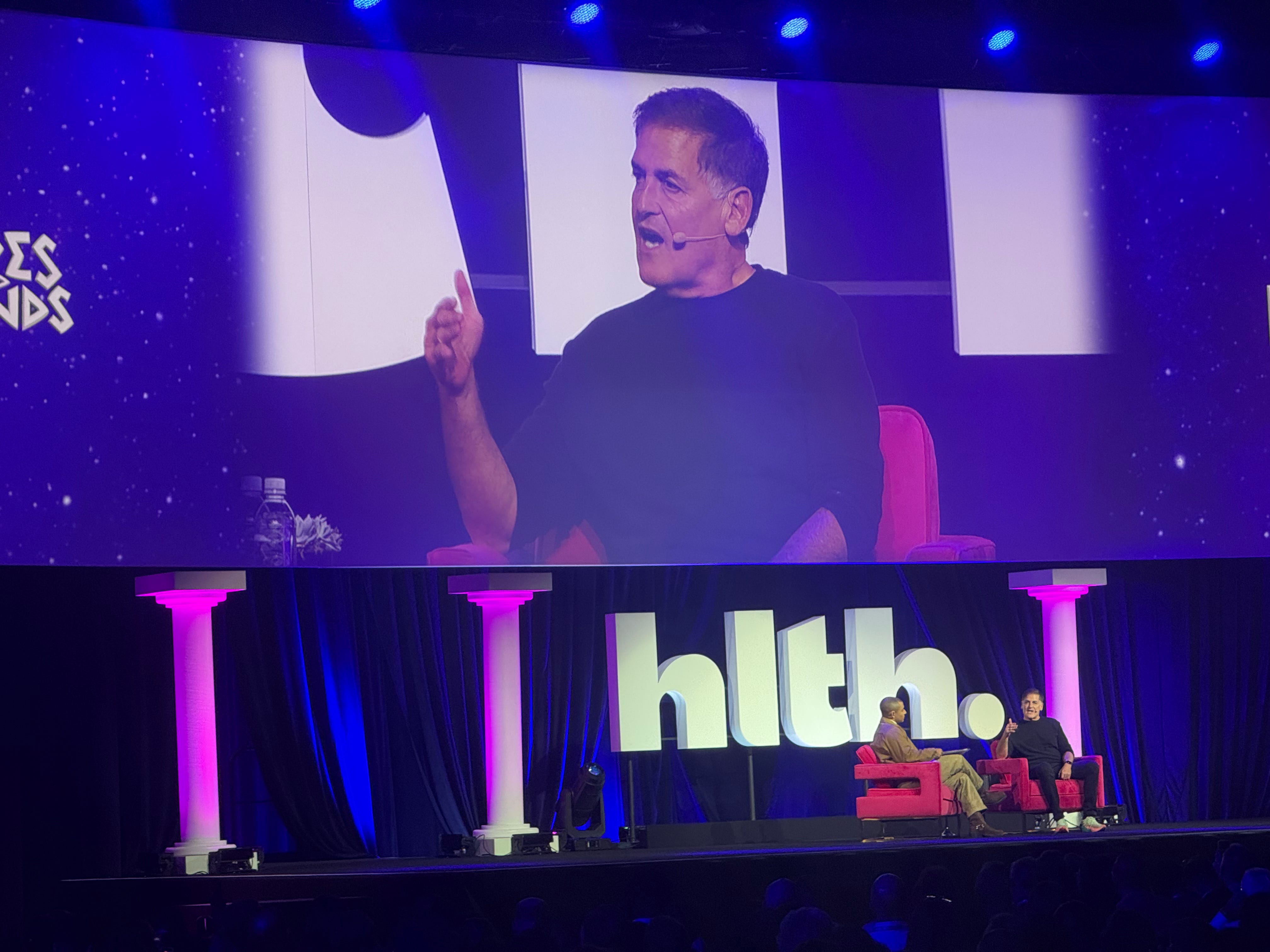
Mark Cuban (filling in for Oprah, who apparently bailed last minute) was classic Mark — saying all the right things about PBMs and U.S. healthcare. Important, sure, but it’s nothing new. He’s been repeating the same message for a while.
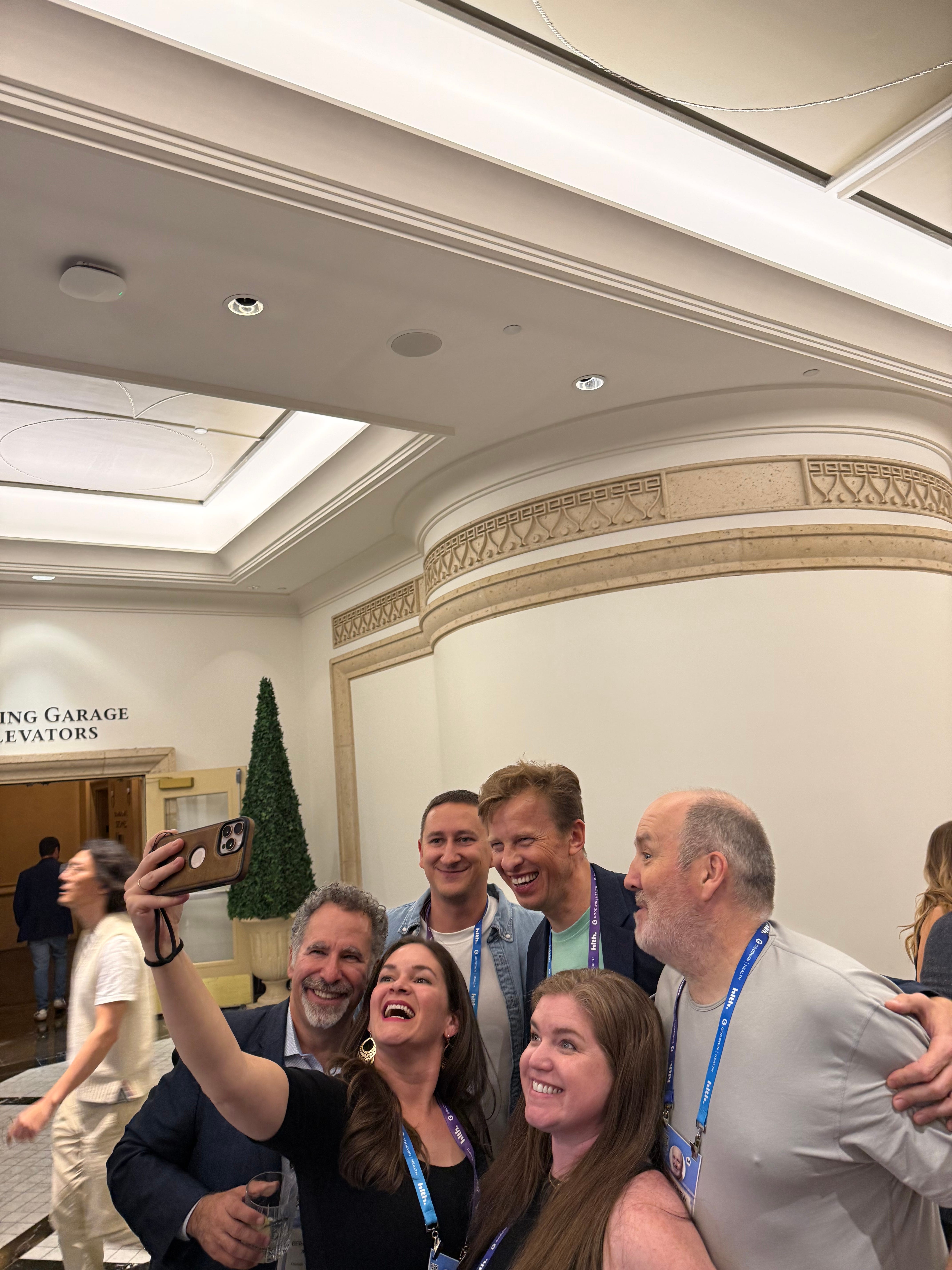
The best part was catching up with friends and colleagues — Alex Koshykov (obviously, let’s be real, I made the trip from Eastern Europe mostly to see him 🙂), Matthew Holt, Kat Kovalchik McDavitt, Lisa Bari, Lyle Berkowitz, Alex LeBrun, and Hillary Lin.
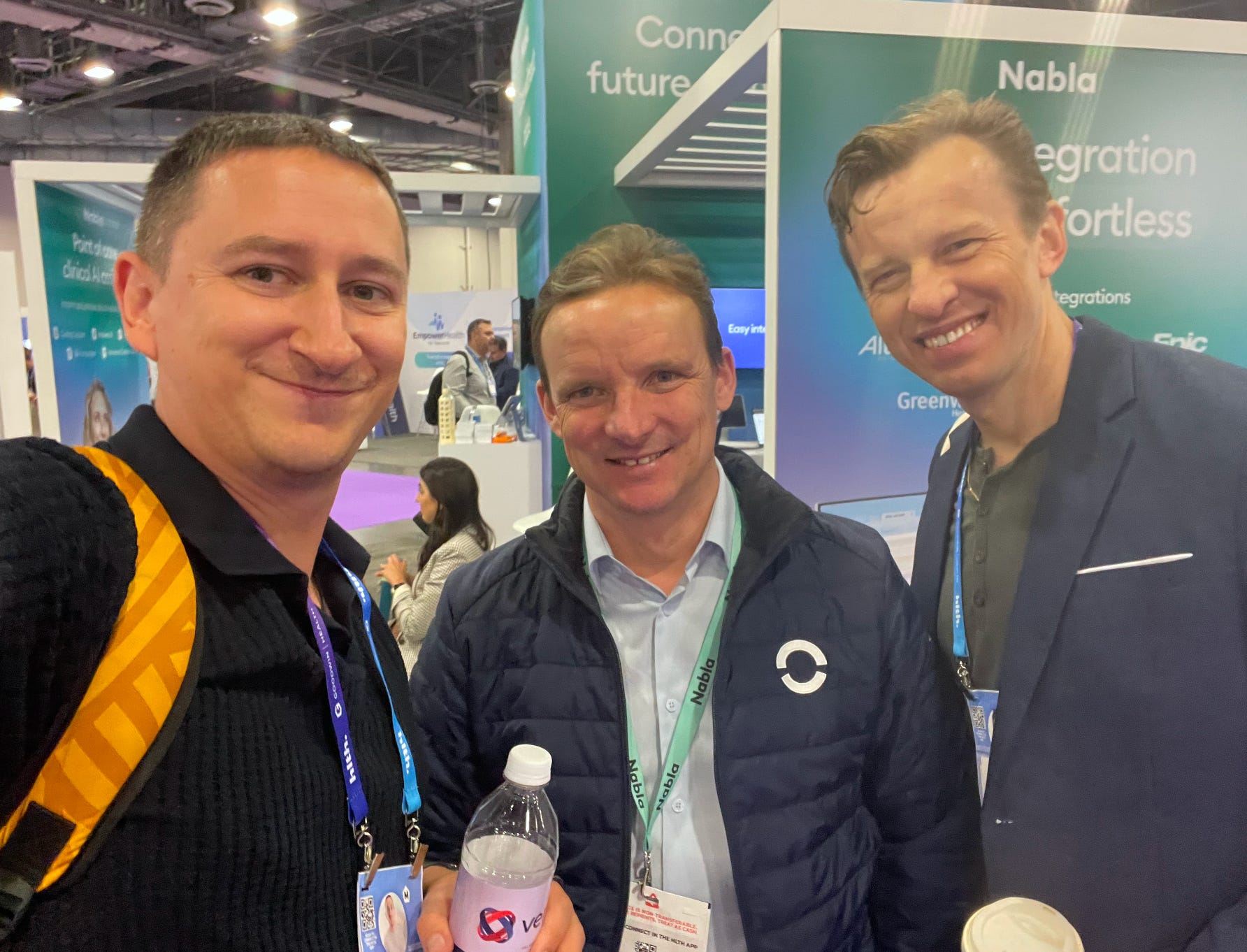
It was also a real honor to finally meet in person two doctors I’ve admired for their unfiltered thinking on AI and other important topics in healthcare: Ben Schwartz and Paulius Mui.
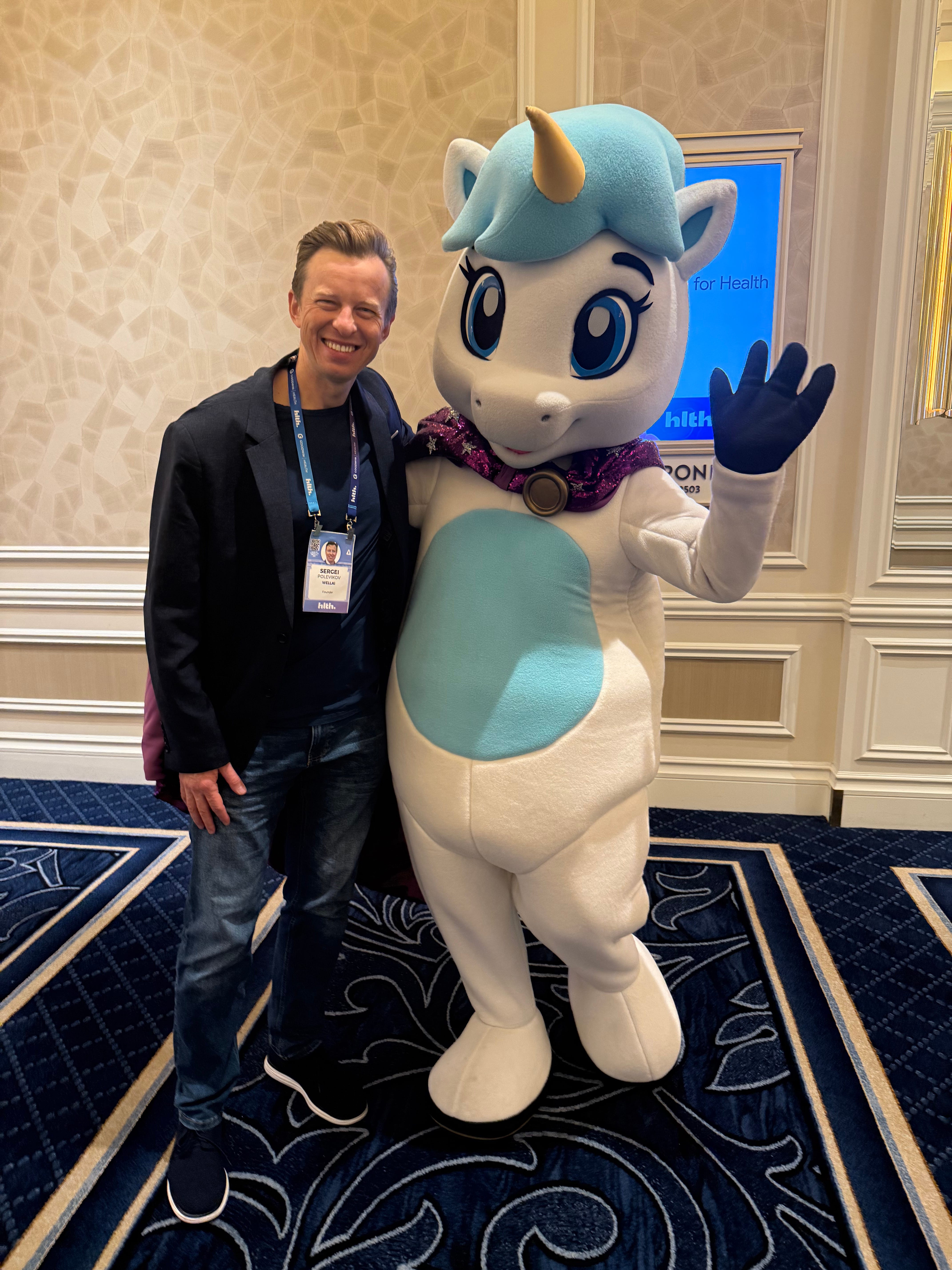
And then there were new friends — most of them readers and supporters of my Substack — Stuart Miller, Serena Wang, Leslie Kirk, Lanty O’Connor, James Baxter (Go ‘Dores!), Anna So Youn Lee, and Elena Iakovleva.
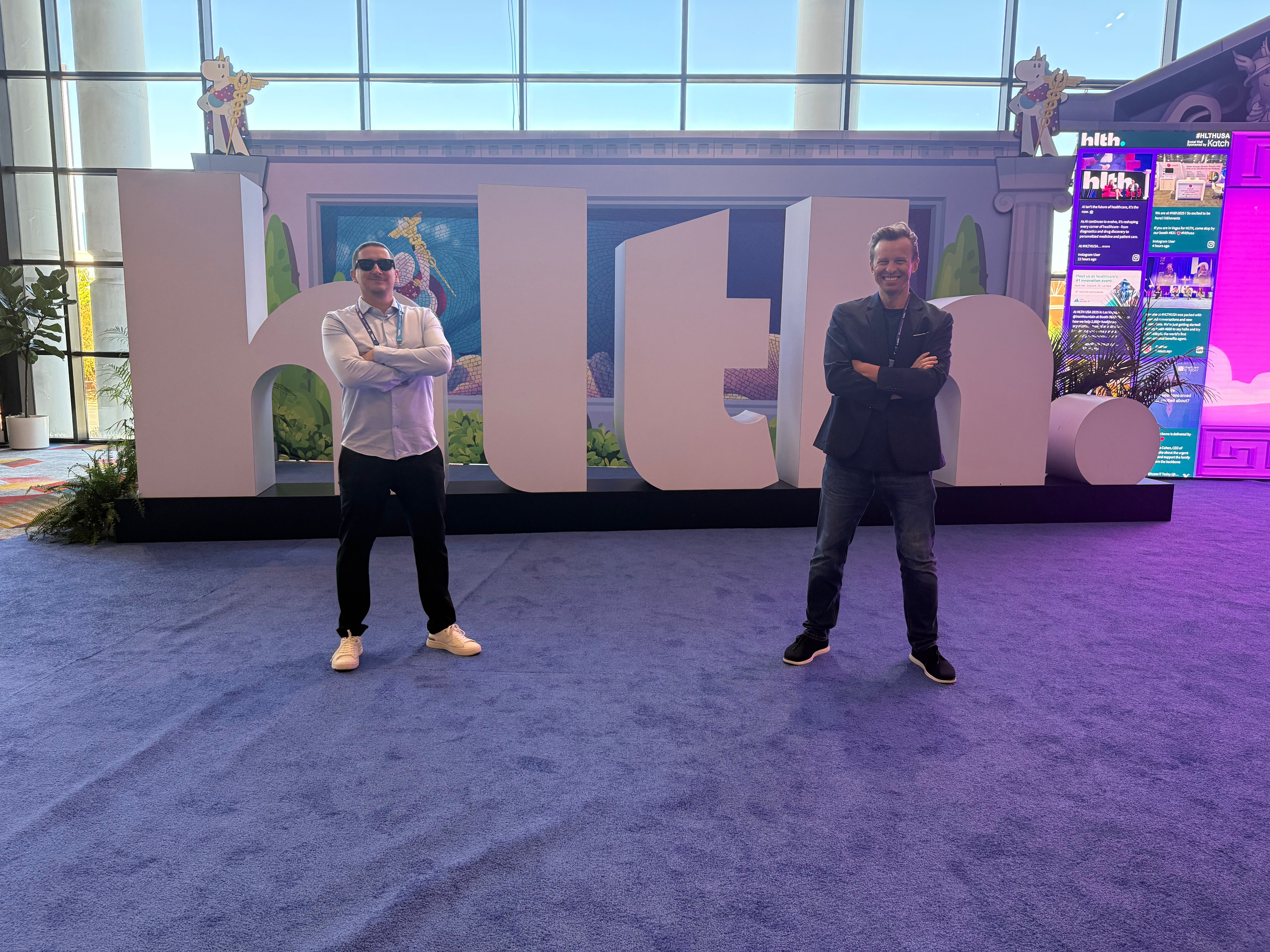
Finally, a big thank you to everyone who agreed to be filmed for our HLTH episode of Digital Health Inside Out. You know who you are 🙂
One of my strangest encounters at HLTH
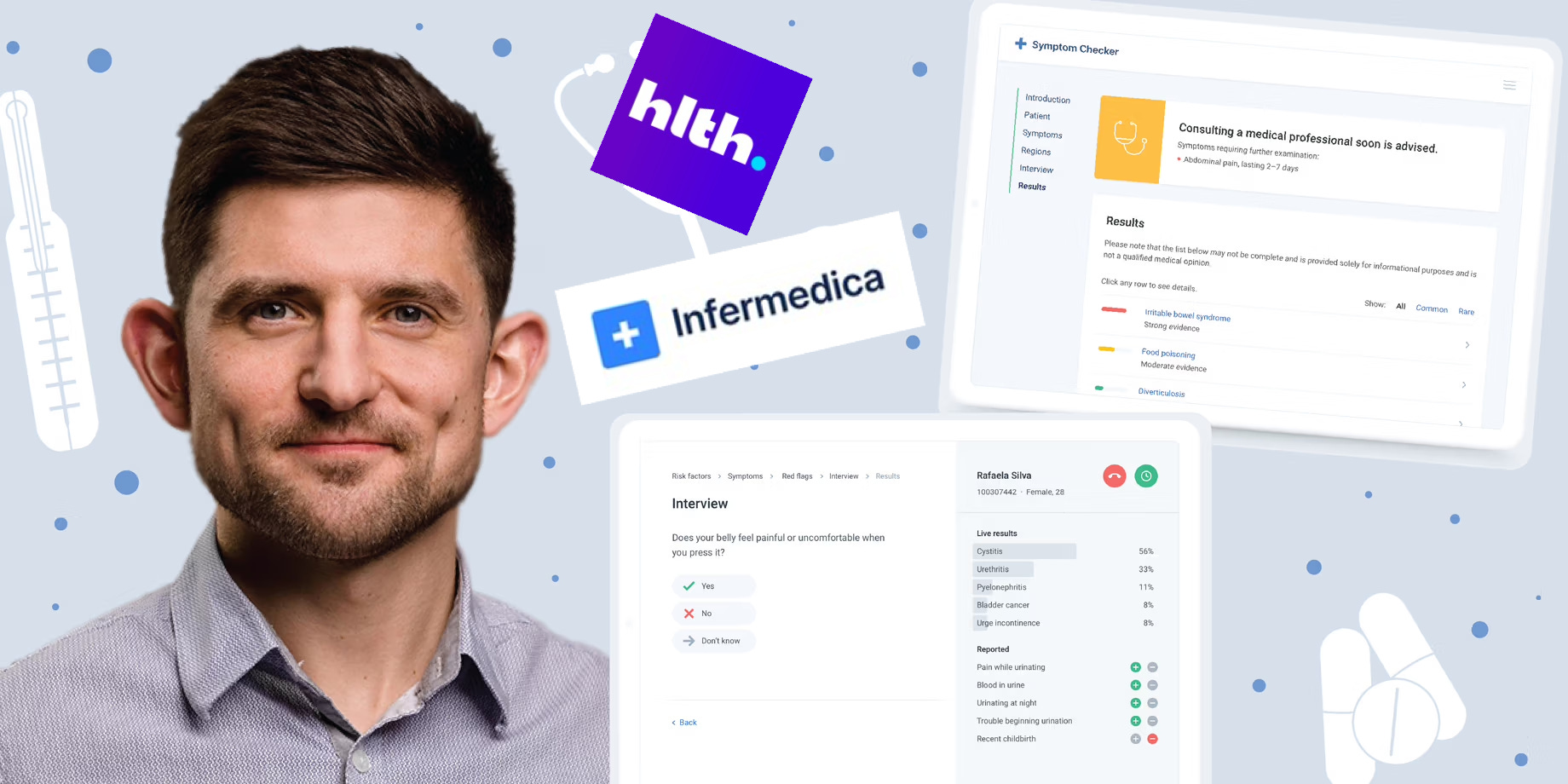
But the most interesting (and honestly, the weirdest) interaction happened in the exhibit hall, where I spotted the Infermedica booth. I saw this awesome-looking unicorn (like the one in the photo) and immediately thought, “I have to get it.” Not for me, of course, but for a kid I know. Or was it really for the kid? 😉
The woman at the booth said it was the last one they had, but after a little bit of pleading, she smiled and handed it to me. 🙂 I told her I’d been following Infermedica for quite a while. She pointed to someone nearby and said, “Oh, that’s our CEO, Piotr.”
I said, “I know Piotr, of course.” That’s Piotr Orzechowski—the legend of digital health in Eastern Europe—not to be confused with the jazz pianist of the same name. My first thought was, “What’s a CEO of a $50–100M ARR company doing working his own booth late in the afternoon in Las Vegas? Doesn’t he have people for that?”
I introduced myself and my friend Alex Koshykov. “You probably don’t know me,” I said, “but I’ve been following your company as a researcher.” He looked at my badge and said, “Of course I know you. I’ve been following your Substack. You’ve been critical of my company.” Then he quoted, word for word, a line from my article last year—the one where I tore into Infermedica’s 97% accuracy claim (and yes, I still stand by that analysis).
I was stunned. I told him, “If you disagreed with my analysis, you should’ve reached out.” Piotr replied that he respects my journalistic integrity and doesn’t want to interfere, even when it’s about his own company. I liked that answer a lot. I also reminded him that in that same piece, I mentioned I’m a big fan and hold him in the highest regard — as an entrepreneur who built one of the strongest sales teams in the digital health industry, starting from humble beginnings in Wrocław, Poland.
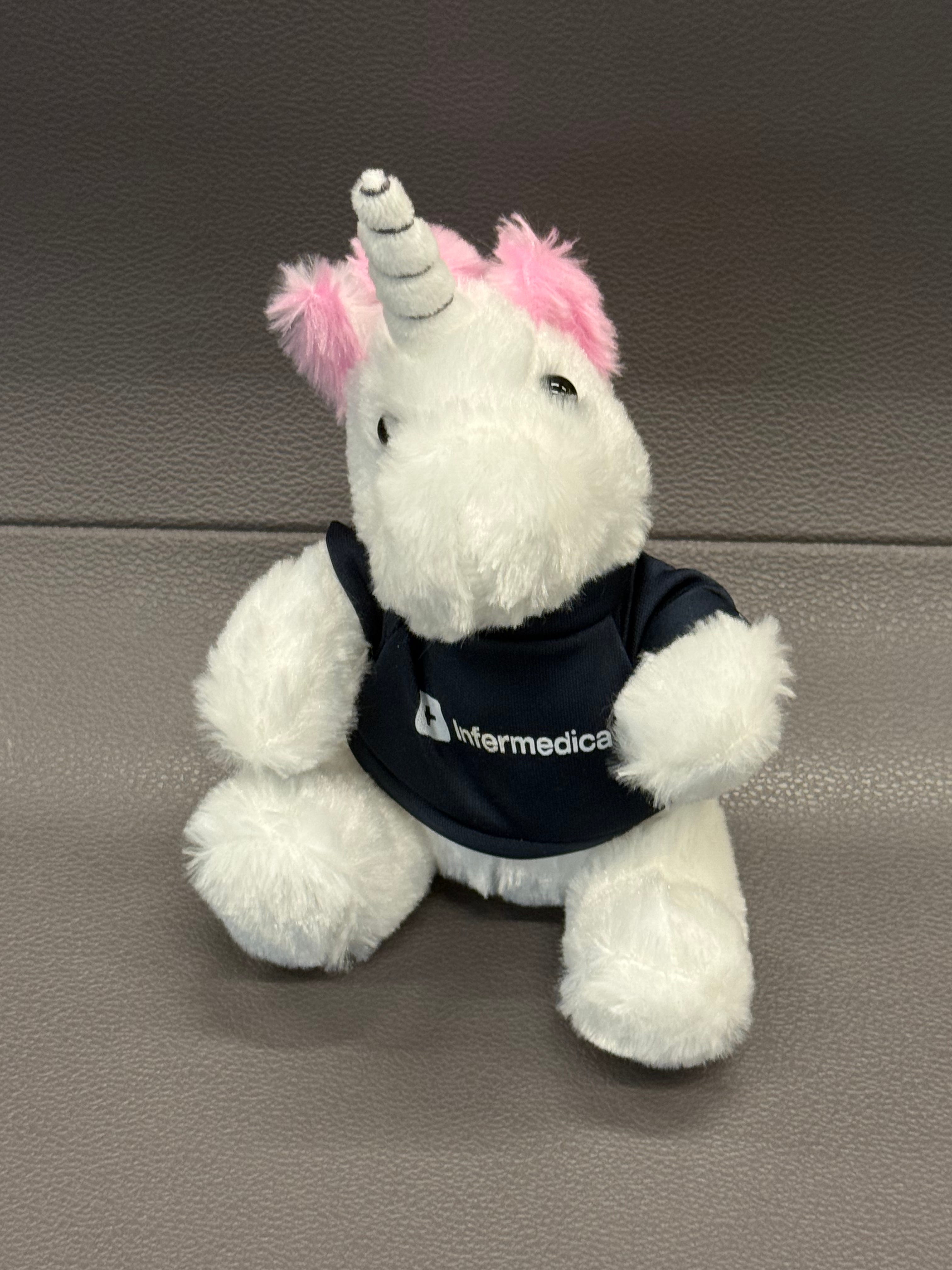
So, is it possible to criticize a digital health company while still respecting its leader? I think so.
Health AI Summit in Albuquerque
What an incredible, high-caliber conference. I was truly honored to be invited as a speaker. It took five(!) flight connections in one day(!) just to get there. But I’m so glad I did. Stefany Goradia and Angelica Maestas pulled off something extraordinary, bringing together 240 healthcare AI experts in one room. I’m still speechless, and honestly can’t fathom how they managed to do it.
I was blown away by the innovators and by the medical community across the state who spent the day pitching ideas and exchanging honest perspectives.
Emily Maginn spoke about her groundbreaking work in women’s health with Exo—a unified data system that begins collecting data right at the point of care. It’s about time we built a dataset that isn’t centered around white men in their 30s and 40s but represents real women’s health.
Amit Mehta, CEO of Amplifier Health, shared their voice-based diagnostic system, where models are trained on audio sequences rather than text. Tokens aren’t words—they’re sound patterns. Now that’s what not being an AI tourist looks like. 😉
Galina Priloutskaya from HealthInsight showcased a remarkable project using technology to bring nutritious food to Indian reservations, building trust with the Indian Health Services (IHS) in New Mexico and the Dakotas. It’s inspiring to see AI and technology directly improving the lives of minority and underserved populations.
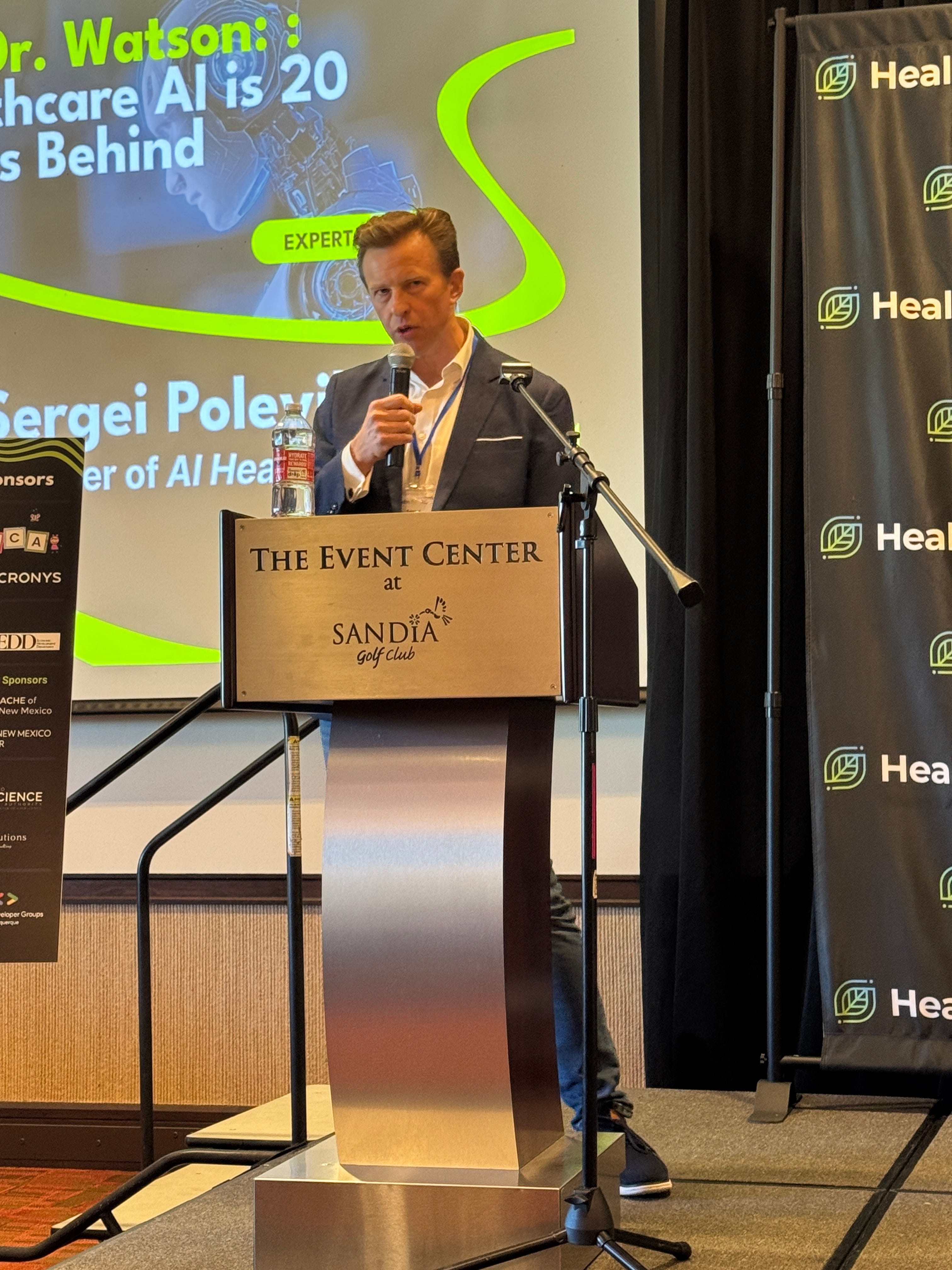
My talk, “Paging Dr. Watson: Why Healthcare AI Is 20 Years Behind,” was incredibly well received. The response was overwhelming—in the best way. There’s a real sense of urgency in our field about how far behind healthcare is in AI adoption, and people genuinely resonated with the solutions I proposed. (In my next Substack post, I’ll be sharing all 100 slides I somehow tried to fit into 30 minutes of my talk. 🙂)
The conference was sponsored by the State of New Mexico, which is investing heavily in AI, energy, education, and even quantum computing. I was deeply impressed by the scale of these efforts, especially the state’s $65B sovereign fund managed by the New Mexico State Investment Council (SIC).

And of course, the setting was stunning—mountain views, open prairie, and that perfect weather in the 60s with endless sunshine. What a beautiful country.
After two straight weeks in the air, I’m finally ready to return to my regular programming. Thanks for your patience with all my wild adventures. 🙏
👉👉👉👉👉 Hi! My name is Sergei Polevikov. I’m an AI researcher and a healthcare AI startup founder. In my newsletter ‘AI Health Uncut,’ I combine my knowledge of AI models with my unique skills in analyzing the financial health of digital health companies. Why “Uncut”? Because I never sugarcoat or filter the hard truth. I don’t play games, I don’t work for anyone, and therefore, with your support, I produce the most original, the most unbiased, the most unapologetic research in AI, innovation, and healthcare. Thank you for your support of my work. You’re part of a vibrant community of healthcare AI enthusiasts! Your engagement matters. 🙏🙏🙏🙏🙏
🔥
Thanks for the name check Sergei. It was a pleasure spending the brief time together. I wish we had more, but I know you and Alex were exceptionally busy. Maybe next time :-).
I love your story about chatting with Piotr. Just goes to show that sometimes our content is quietly absorbed without immediate feedback. (Lesson well learned!).
For now safe onwards travels and looking forward to the the HLTH podcast/video.
Bethany and I are trying to get my observations together before they become irrelevant so hopefully in the next week or so.