



Welcome to AI Health Uncut, a brutally honest newsletter on AI, innovation, and the state of the healthcare market. If you’d like to sign up to receive issues over email, you can do so here.
Oscar Health just rolled out its shiny new GPT-5 Superagent. Let’s see what it’s actually good for, shall we?
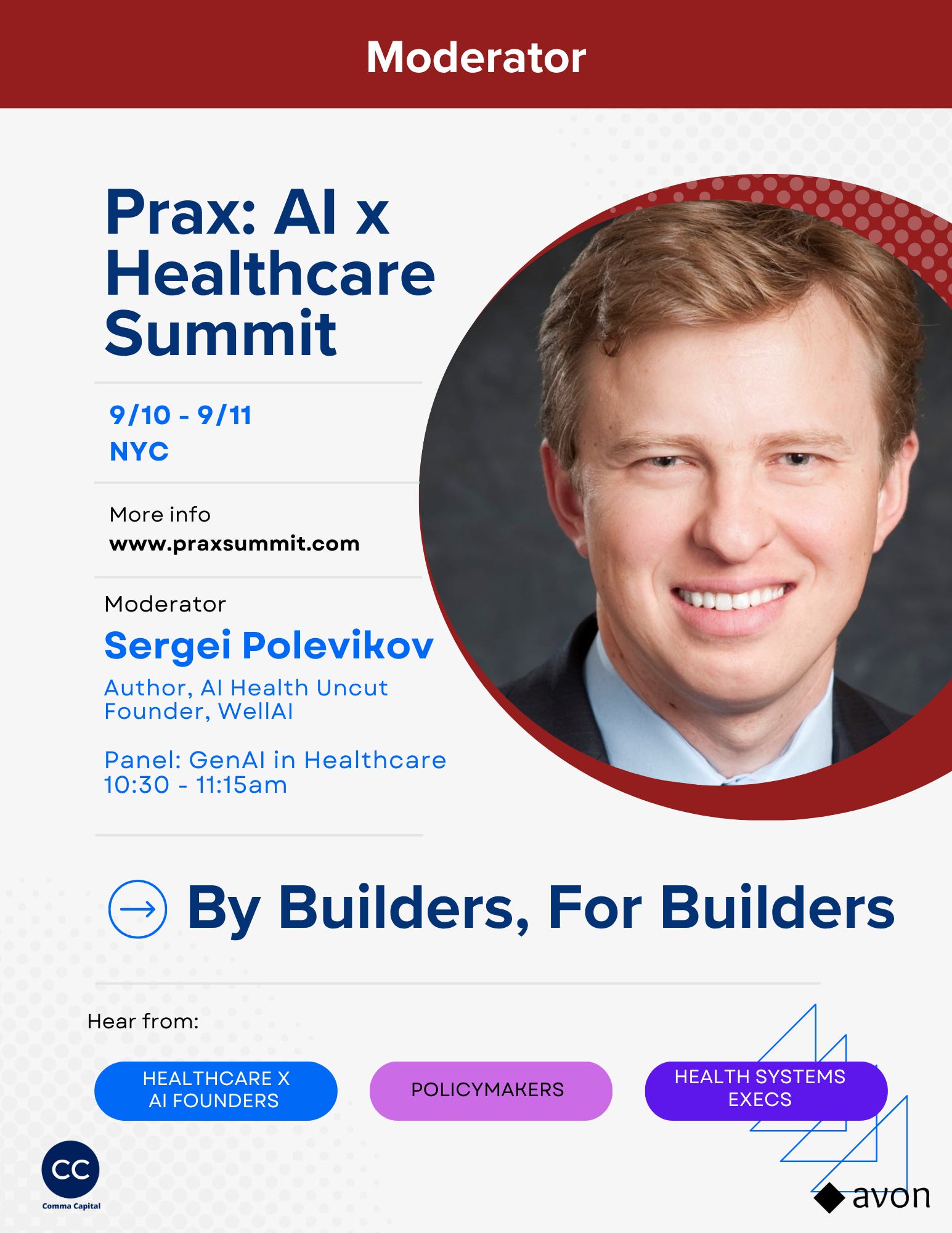
But first, a quick announcement. On September 11, 2025, I’ll be moderating the panel “GenAI in Healthcare: A Conversation with Foundation Model Builders” at the Prax AI x Healthcare Summit in NYC. The agenda for this conference looks really strong, especially if you’re in healthcare AI.
Get $100 off the ticket price when you become a paid subscriber to AI Health Uncut.
OK, now back to super-duper-agents... 😉
TL;DR:
1. Oscar’s Bumpy History: From Skepticism to Stock Rally
2. The “Big Beautiful Bill” and Looming ACA Cuts
3. Inside Oscar’s GPT-5 Superagent: Architecture & Early Wins
4. Super-Intelligence or Super-Illusion? The RAG-Powered Assistant Debate
5. Showdown: Oscar’s Superagent vs. Hippocratic’s Polaris vs. Microsoft’s MAI-DxO
6. Conclusion – Oscar Ships. Hippocratic Spins. Microsoft Aims for the Sun.
1. Oscar’s Bumpy History: From Skepticism to Stock Rally
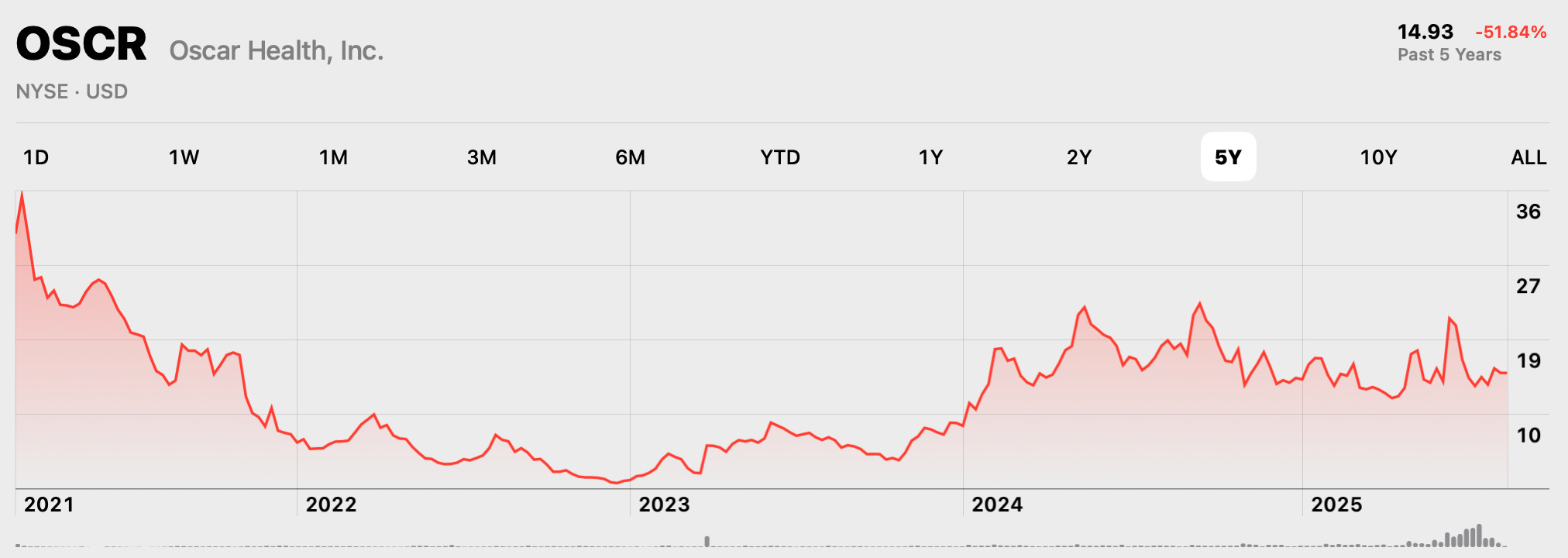
Oscar Health has long been the punching bag of digital health skeptics – and I’ve been among the loudest. For years, this VC bros-backed ACA (Affordable Care Act, or Obamacare) insurer burned cash with dazzling tech promises but dismal underwriting. Its IPO hype fizzled into a near-penny-stock as losses piled up. Yet 2023-2024 brought an unexpected plot twist. Under new leadership (ex-Aetna CEO Mark Bertolini’s cost-cutting regime), Oscar even squeaked out profits in select quarters – including (gasp) its first-ever annual profit ($25M) in 2024. Membership surged past 2 million. The once-doomed stock went on a tear, rocketing ~272% in 2023 after a 70% plunge the year prior. In short, Oscar’s condition stabilized, and investors rediscovered a pulse.
Does this mean I’m eating crow? Perhaps only a nibble. Oscar’s vitals have improved. But let’s stay sober. A one-off profit does not equal sustained health. The core business still runs razor-thin margins in a volatile insurance market. And as we’ll see, Oscar’s flashy new AI “Superagent” might be more Band-Aid than panacea. In typical Oscar fashion, the company is hyping a shiny tech cure-all (GPT-5! superintelligence!) while very real financial and regulatory risks loom just offstage.
2. The “Big Beautiful Bill” and Looming ACA Cuts
And voilà — just like that, the party was over for Oscar.

The “Big Beautiful Bill” is now law, which means the policy air has shifted from hypothetical to headwind for ACA insurers. Subsidies that juiced exchange enrollment are set to phase down, and membership rules are tightening. Oscar’s exposure is obvious. Its core ACA book now faces higher churn and sicker risk pools just as the company slashed guidance and swung from a hoped-for profit to an expected full-year operating loss. Management flagged worsened ACA risk per Wakely’s data, a sharply higher medical loss ratio (MLR), and the need to reprice plans for 2026. Translation. Premiums rise. Healthy members bolt. The Superagent can write sparkling prompts, but it cannot pay claims if members cannot pay premiums. (Source: Bloomberg.)
The company racked up $230 million in operating losses in Q2 2025, and it may be a preview of more financial headaches to come.
Note: Oscar Health is subject to Medical Loss Ratio (MLR) rules, also known in insurance-speak as the Medical Care Ratio (MCR). Under the Affordable Care Act (ACA):
Individual and small-group health plans must have an MLR of at least 80%, meaning they must spend at least 80¢ of every premium dollar on actual care and quality improvement. Fall short, and they’re cutting rebate checks to policyholders.
Large-group and Medicare Advantage plans have to hit 85%.
Self-insured plans get a free pass from these rules.
3. Inside Oscar’s GPT-5 Superagent: Architecture & Early Wins
Leave it to Oscar to prescribe AI as the miracle drug. Enter the GPT-5 Superagent, Oscar’s new AI-powered assistant for its insurance business.
So, what is this Superagent, exactly?
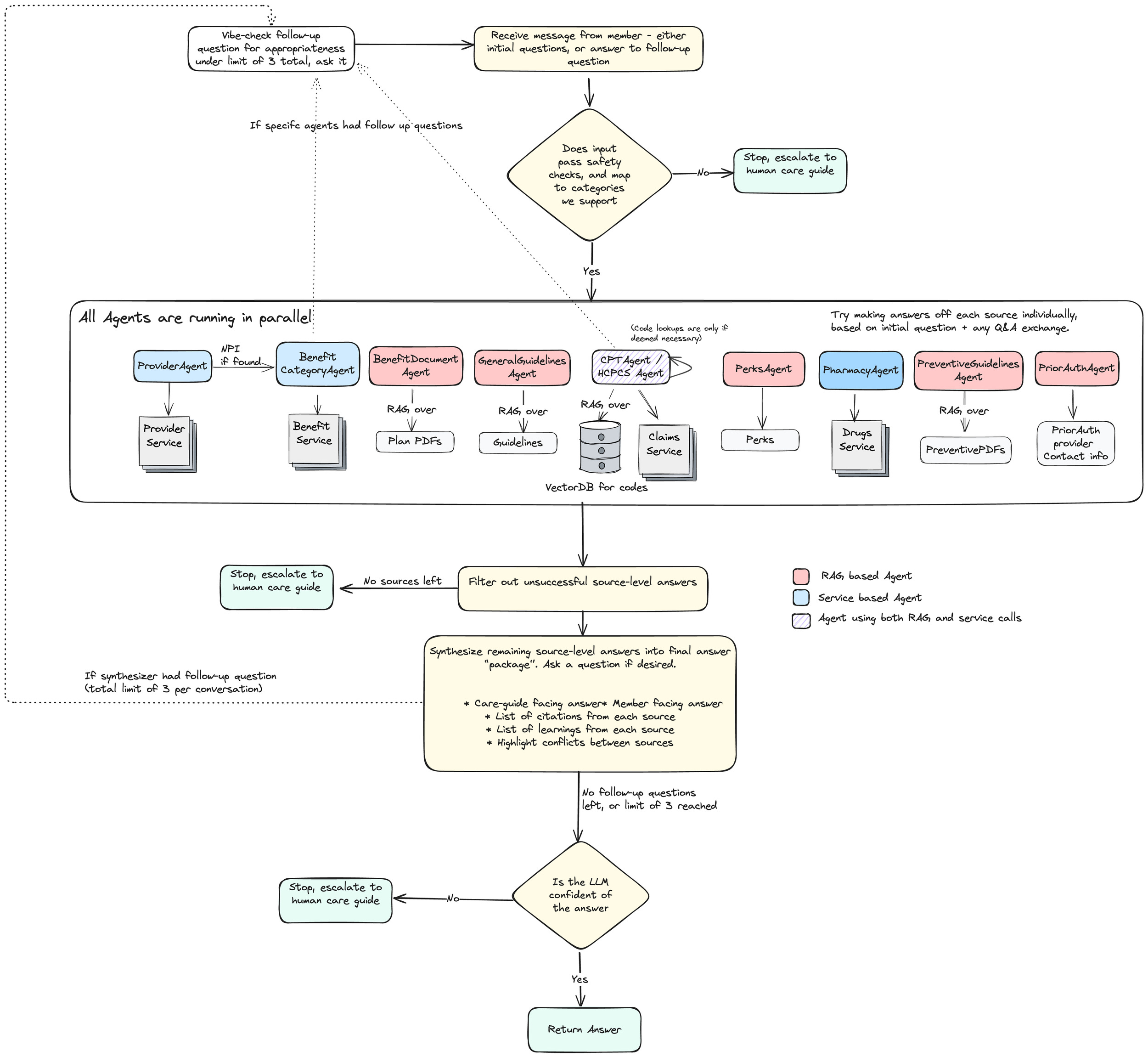
In practical terms, it’s an orchestration of a large language model (OpenAI’s GPT-5) with a bunch of Oscar’s internal tools and data. Oscar essentially bolted GPT-5 onto its system as a brainy co-pilot for customer service. The architecture is a layered affair: they use the LLM to interpret member questions and then retrieve answers from various back-end sources – a classic retrieval-augmented generation (RAG) approach. Think of it as a pipeline: intent classification → trigger specialized data fetchers → GPT synthesis → answer with citations. The Superagent employs a fleet of sub-agents, each an expert in a specific domain of Oscar’s data. For example: a ProviderLookup agent checks if a doctor is in-network, a Benefits agent pulls your plan’s co-pay rules, a Pharmacy agent finds drug coverage, etc. These sub-agents run in parallel, hitting Oscar’s live APIs and knowledge indexes, so the system can compile a holistic answer fast. Crucially, every snippet of info comes with a source citation, and if the AI isn’t confident, it flags a human to step in. In short, the Superagent is designed to crunch all of Oscar’s convoluted policy documents, claims rules, provider directories, and member data in seconds – so you don’t have to wait on hold for an hour to find out if that MRI is covered.
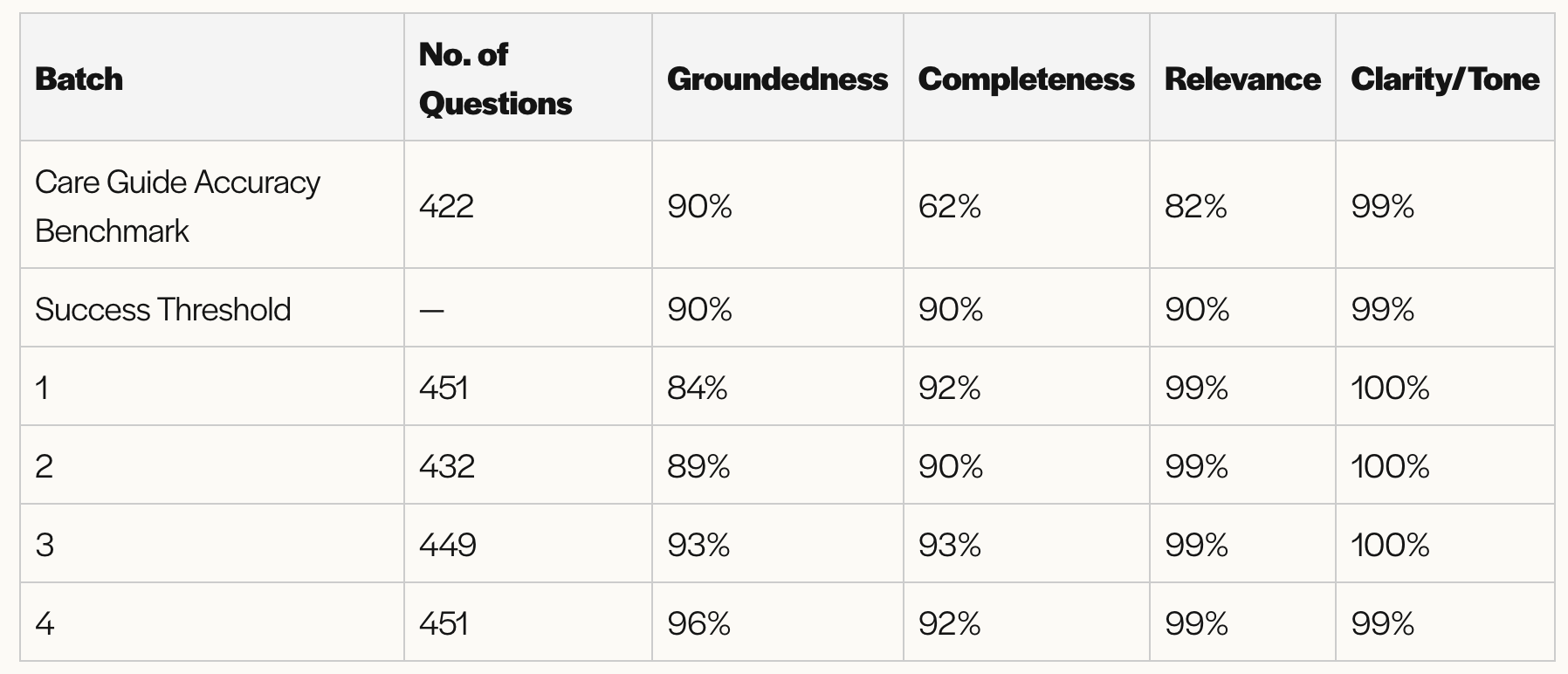
Oscar rolled out the Superagent internally to a pilot group of service reps (dubbed Care Guides) and saw promising results. In the pilot, the AI co-pilot boosted the speed and consistency of answers for common insurance questions. Care Guides reported an 82.6% satisfaction rate using the tool – not exactly nirvana, but a strong vote of confidence from previously overwhelmed support staff. The company conducted extensive quality audits, measuring things like groundedness (factual accuracy with sources) and relevance. Over successive iterations, they claim the Superagent reached over 90% accuracy on key metrics (groundedness, completeness, relevance) – exceeding the success threshold they set for launch. By the time it was rolled out more broadly, the agent could answer the vast majority of benefit and coverage queries correctly in one go. Early wins include resolving many inquiries instantly that previously required call-backs or manual research. Oscar even brags that the Superagent does “unlimited work” for the member – tirelessly sifting databases and simulating complex benefit scenarios to give a one-and-done answer.
They’re not stopping at Q&A either. Oscar is iterating new capabilities for the Superagent every two weeks. Some real-world actions are now automated: the bot can issue new ID cards, help schedule appointments, and “explain” doctor choices to members. Plans are in motion to deploy it on voice calls, letting members talk to the AI directly. With GPT-5’s multimodal and coding prowess, Oscar even hints the agent could eventually execute tasks like adjusting claims or handling billing quirks on the fly.
We shall see…
By the way, want to talk to a human customer service agent? Forget pressing ‘0’. I hope you’ve got a full arsenal of obscenities ready, because that seems to be where the GPT-5 Superagent finally draws the line — only then will it hand you over to a human. 😉
4. Super-Intelligence or Super-Illusion? The RAG-Powered Assistant Debate
Time for a reality check: Is Oscar’s GPT-5 Superagent truly “intelligent,” or is it just a slick auto-complete engine chained to a database?
