


Welcome to AI Health Uncut, a brutally honest newsletter on AI, innovation, and the state of the healthcare market. If you’d like to sign up to receive issues over email, you can do so here.
What can I say? Chrissy Farr is world-class. She knows everyone in the industry. She is respected across the industry. And yet, she still talks to our little show.
She respects what we do. She respects what I do at AI Health Uncut exposing problems in healthcare. And she even gives me pointers from both sides of the story: as a journalist and as a venture capitalist.

But first, after three years of investigating bad actors in healthtech, I’ll be sharing what I’ve learned in a talk called “How to Spot the Next Theranos in Healthcare AI.” I’ll first be speaking in Vilnius, Lithuania, at a Health2Tech event on May 6, and then at the Digital Health & AI Innovation Summit in Boston on June 9. If you can make it to either event, I’d be happy to meet you.
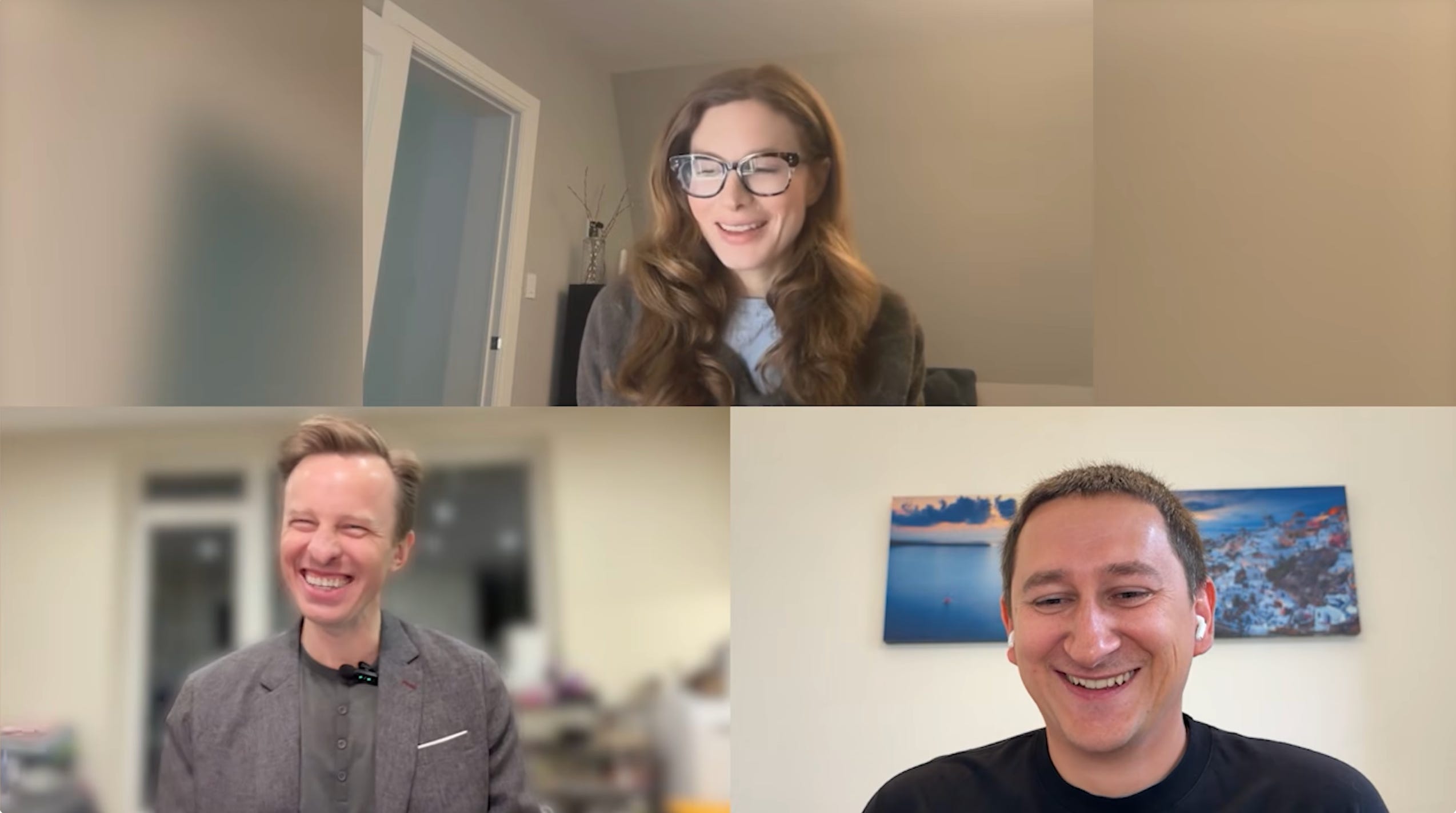
The Digital Health Inside Out podcast continues with one of the most candid conversations we’ve had on the show. Alex Koshykov and I sat down with Christina Farr, former CNBC senior tech-health reporter, founder of Second Opinion Media, co-founder of Scrub Capital, and advisor to Manatt Health, for a no-holds-barred conversation about what’s broken in healthcare media, what’s about to break in digital health, and why she’s not coming back to journalism. (We miss you down here, Chrissy. 😢)
Here’s the link to the full interview:
Christina is a rare creature in this industry. She spent nearly a decade as a working journalist (Fast Company, Reuters, CNBC) covering everything from Apple’s medical record scoop to Amazon’s healthcare ambitions. Then she did what almost none of her former colleagues have done: she walked across the table and learned the other side. OMERS Ventures. Manatt Health. Scrub Capital. And now, a media company of her own with 50,000+ subscribers and a podcast called Lifers.
We wanted to understand how Christina sees the industry now that she’s seen it from every angle: the journalist’s, the VC’s, the operator’s, and the founder’s. She didn’t disappoint.
TL;DR:
1. The Journalist Who Left Journalism
2. The a16z Question
3. The Most Dangerous Story in Healthcare AI
4. Nice Guy Sentiment
5. We Don’t Need More Investigative Journalism. We Need More Operational Transparency.
6. The IPO Winter and the AI-Native Care Delivery Thesis
7. AI Scribes and the Epic Problem
1. The Journalist Who Left Journalism

The first thing Christina wanted to make clear: she’s not a journalist anymore.
“I view myself as having left journalism in 2020, when I left CNBC. I associate it with very professional newsrooms and really strong ethics. I didn’t own a single stock back then. Now I’m invested in companies, advising companies, doing partnerships and sponsorships. So I’m not a journalist anymore. But I have very much those editorial instincts that guide how I observe and cover the industry.” — Christina Farr
I asked her the obvious question: do you ever wonder if you’d have had more impact staying in journalism full-time?
Her answer was honest and a little bleak. “A lot of my colleagues are no longer in journalism. It’s not by choice. Newsrooms continue to shrink. We still don’t have a viable business model for journalism. There are very few newsrooms now that even cover healthcare.” Her unsentimental conclusion: she may not even have a job today if she’d stayed.
But the more interesting part was what she said she gained by leaving. When she walked into venture capital, the firm’s first question wasn’t about her network or her reporting. It was about her Excel skills, which she hadn’t used since university. So she dusted off the Wall Street prep courses and learned to read a P&L.
That changed how she sees companies. Her example: Cerebral.
“As a journalist, you could look at Cerebral and say, oh, it’s growth at all costs. That’s what’s driving that business. As a VC, you can look under the hood at the unit economics and say: oh, it’s because we hardly reimburse for mental health, and when you layer in pharmaceutical medications, suddenly the unit economics start to look more attractive at scale. So then you see it in a different light. You can see exactly why those incentives exist.”
The first-principles framing is the crux of her career pivot. The journalist saw “growth at all costs.” The investor saw a model that financially rewarded prescribing controlled substances at scale. Both were right. And as later DOJ enforcement actions against Cerebral made painfully clear, neither view was sufficient on its own.
2. The a16z Question
I had to ask. Lifers is produced by a16z Studios. So would her audience get the same story they’d get from a reporter with no relationship to Andreessen Horowitz?
She didn’t dodge.
“I have no connectivity to a16z. Nobody talks to me from the firm. I have no connection to them. There’s no agreement that I have to talk about their portfolio companies or anything like that. I don’t want to be owned by a venture fund.” — Christina Farr
Here’s the backstory she walked us through: Christina started Second Opinion as a side project while she was at OMERS Ventures, with no business motive. Eventually, a network called Turpentine (founded by Erik Torenberg) approached her with a model of giving podcasts to people with niche-industry followings. Other Turpentine shows include TBPN (”a very hot new media property”) and the economist Noah Smith. They gave her free reign. Second Opinion the podcast became Lifers.
Then Turpentine got acquired by a16z in April 2025, and Erik became a general partner at the firm. Contracts were renegotiated. Her position: complete editorial independence, no portfolio-company quotas, no firm communication.
“I don’t want to be owned by a venture fund, but partnering with a new media firm and new media experts seemed really appealing.”
What’s she gotten out of it? A crash course in formats she didn’t know: YouTube, Spotify, video. “They’re like, ‘You’ve got to do a walk-and-talk video in your garden, sharing how employer-sponsored healthcare in the US even exists.’ I can see people being like ‘who is that weird lady?’ But this is how a lot of people consume information now.”
She is also clear about what Second Opinion isn’t: it isn’t investigative reporting. “We’re not really doing that. We focus on analysis. A typical Second Opinion story might be a guide to reimbursement for some corner of healthcare. There’s no news. You’re not investigating a company. But these are useful operational playbooks for my audience.”
This is, I’d argue, the cleanest statement anyone in healthtech media has made about the trade. She’s not pretending to be CNBC. She’s running a different product. The audience can decide whether the trade is worth it.
3. The Most Dangerous Story in Healthcare AI
Alex asked Christina which story being told in healthcare AI right now is going to age the worst.
She didn’t hesitate: the way we gloss over job loss.
“Every time I hear about it in almost a gleeful way of somebody’s margins are about to improve, it makes me feel physically ill. Where is all of our empathy? Where did it go?” — Christina Farr
This was the moment in the conversation where she got genuinely angry, and it was the most important thing she said. Healthcare systems are some of the biggest employers in local communities, often rural communities. And tech people are talking about gutting that workforce, she said, “in a way that absolutely lacks humanity.”
She is not a Luddite about the underlying reality. “We have far too many people in task-based manual roles that are purely administrative, especially within payers and systems.” But the absence of any serious dialogue about reskilling, retraining, or redeployment, paired with what she described as the gleeful tone of margin improvement, is what she thinks won’t age well.
This is the opposite of the standard health-tech podcast applause line. Almost every AI scribe and revenue-cycle automation pitch I see frames “labor displacement” as feature, not cost. Christina is one of the few people in this ecosystem with a media platform actually saying out loud that there is a human cost on the other side of those efficiency gains, and that we should at least be honest about it.
4. Nice Guy Sentiment
When we got to her book The Storyteller’s Advantage, Alex asked Christina which company is doing storytelling well in healthtech right now. Her answer reframed the question.
“I don’t really believe in company storytelling. I don’t think anyone cares about brands. People like to follow people.”
Her example was Zachariah Reitano, founder of Ro. She’d been initially skeptical of the cash-pay telehealth model. He found out, reached out, and invited her on a two-hour walk in New York with his dog. No entourage. No staff. No messaging bible. Just a founder having a real conversation with someone who didn’t believe in his business yet.
Then there was the Super Bowl ad.
When Ro ran a Super Bowl spot during Super Bowl LX in February 2026, Reitano did something almost no founder does: he wrote a long-form public essay called “The Economics of a Super Bowl Ad”, breaking down the air-time floor (~$233,000 per second), the production cost ($1–4M), the talent cost ($1–5M), the NBC-required companion-media commitment ($7–10M), and the all-in real cost ($16-29M for one 30-second slot). He framed it not as a moonshot but as a calculated portfolio bet: capped downside at 1-5% of a nine-figure marketing budget, asymmetric upside.
Other founders shared it. Operators shared it. Christina republished it in Second Opinion. Reitano didn’t have to do any of that. He chose to.
“You can’t measure ‘nice guy sentiment.’ But nice guy sentiment is so useful in so many different ways: when you’re being reference-checked, when somebody asks about a company, people generally think of you as somebody who wants to help.” — Christina Farr
Her wish list: more founders who help each other instead of hoarding operational know-how. Fewer founders who present nothing but hype to the market.
“Hype is a very fast path to ‘what comes up must come down.’”
5. We Don’t Need More Investigative Journalism. We Need More Operational Transparency.
I told Christina I was in the middle of investigating Carbon Health’s bankruptcy, and that one of the most striking things about the story is that it’s been three months since the Chapter 11 filing and nobody has written a real post-mortem. People keep reaching out to me (former employees, sources), saying “nobody’s writing about this.” Mainstream outlets are funded by the same VCs and PE firms who run the industry. Investigative work is being lost.
Christina’s answer: the fix isn’t more investigative journalism. It’s more operational transparency from founders themselves.
“Because we don’t talk about anything but positive momentum-driven milestones, and we are so not authentic or honest as an industry, then it just seems very surprising when out of nowhere you hear that a company has failed.”
Her proposal is concrete. Founders should share more in whatever ways they’re comfortable with:
Convene a forum of other founders to discuss payer-contracting challenges.
Lay out a painful EHR migration in a monthly investor update alongside the wins, paving the way for the next group of investors to understand a slow-growth period.
Stop hiding the operational know-how. Stop presenting hype.
“If founders can get into this mindset of just sharing a little bit more (to the extent they can comfortably) we can move into a space of helping each other, rising each other up, being collectively more successful as innovators in an industry that makes it really hard to be innovative.”
Then she made a point I hadn’t heard articulated quite this way before: operational transparency is also the best defense against investigative journalism. “If the company has been honest about challenges along the way, you’ve taken the wind out of the sails of the investigative piece.”
Christina is still a believer in investigative work for clear fraud, Medicare billing fraud, borderline-legal behavior. “Those things should obviously get reported on.” But for ordinary operational pain (the payer headache, the failed acquisition, the bad hire) the investigative model is the wrong tool. The right tool is just talking.
I pushed back. What if private companies had to file simple one-page financial summaries, like the mutual fund industry has done for decades? Right now, all we have is exaggeration. (I cited Hippocratic AI, where a major investor, WellSpan, was apparently representing the product price at roughly 5x its actual market value.)
Christina said it’s a lot to ask, but the people covering funding rounds could be savvier.
“Company raised X dollars means absolutely nothing. You raised a billion. Cool. What’s your revenue? What type of revenue? What’s the multiple? How does it compare to other companies in the same peer set? I’m receiving zero of that information as somebody who would publicly disseminate it. So I give it a single sentence.”
She wants a different conversation entirely. “Why did it take a women’s health company hitting $250M in revenue to get unicorn status, whereas we’re happy to give unicorn status to some AI company led by a tech bro with $10M in revenue? Those are the right questions to be asking.”
“Even founders don’t have access to this information about their own peer set.” — Christina Farr
This may be the most damning line of the entire interview. The founders themselves can’t see the comparable economics of their competitors. The journalists are gone. The investors won’t share. The result is an industry making capital allocation decisions in the dark.
6. The IPO Winter and the AI-Native Care Delivery Thesis
Christina has been calling 2024 a “digital health IPO winter,” and we asked her where things stand now.
The honest answer: better, but not good. There’s still a lot of uncertainty and what she called “irrational behavior” in the markets. Many of the companies that have gone public are sub-scale — a single slightly-below-expectations data point in an otherwise solid earnings report can tank the stock momentarily. Equity researchers don’t even want to cover healthtech because the market caps are too small. “The best people don’t want to cover these companies. They want to immediately cover medical devices or pharma.”
But she pointed to one positive signal worth watching: the Talkspace acquisition by Universal Health Services at roughly $835M in March 2026, which translated to a ~3.6x revenue multiple, substantially better than Transcarent’s January 2025 acquisition of Accolade at roughly 1.5x.
“If I’m at Lyra, I might be looking at that and thinking, oh, okay, maybe this is a window. Given the reaction seemed quite positive to Talkspace’s shift from D2C to B2B, that was a positive sign.”
But she’s quick to note that even Talkspace, at 3.6x, is a tough outcome for anyone who invested at growth-stage valuations of 10–20x revenue. Across the public healthtech universe (~200 companies I track) the median revenue multiple is around 2.6x. The hard reality: companies trading at 20–40x in private markets become public companies and discover the market has different priorities.
She thinks the secondary market is where a lot of liquidity will come from this year, though access remains uneven. She’s also seeing more founders take money off the table at funding rounds, especially once the company is profitable.
But the bigger frame (and I think this was her sharpest forward-looking point) is what she calls a “3.0 moment” for tech-enabled services. She borrowed the phrase from her friend Keaton Bedell, co-founder and CEO of Bridge.
“I have more conviction about AI-native care delivery than I do around some really expensive tools company trying to sell into a buyer that doesn’t have the sophistication to properly integrate the technology. I think these businesses might even be undervalued right now.” — Christina Farr
Her reasoning: AI lowers operating costs, B2B insurance contracts have matured (lowering customer acquisition costs), and virtual care has proven itself in specific verticals where pent-up demand is real: menopause, obesity management. These businesses can be built much more efficiently now, requiring much less capital. The outcome doesn’t need to be an IPO. It could be PE. It could be a strategic acquisition. The capital partner should match the company.
This is the most actionable thesis in the conversation. If she’s right, the next vintage of digital health winners isn’t the next Hims or the next Hinge. It’s a generation of leaner, AI-native, vertical care-delivery companies that may never even need the public markets.
7. AI Scribes and the Epic Problem
One of our very first episodes of Digital Health Inside Out asked: Why the Hell Do We Need 126 AI Scribes? Last episode we sat down with Shiv Rao at Abridge. So I had to ask Christina the question I’ve been asking everyone: is ambient scribing a real breakthrough, or just the same hype cycle dressed up in a new form factor?
She gave it credit. “It is definitely a very big problem to be solved. I’ve seen a lot of AI companies where I’m like, what is the problem you’re solving? Seems like a very minor efficiency or way to make our broken system slightly more broken. Solving the burnout crisis amongst providers is a hair-on-fire-level problem for a health system. That’s where you’ve seen massive penetration into health systems in a very short period of time. We haven’t seen that many times in healthcare.”
But then she named the elephant in the room.
“Epic is the elephant in the room. I would bet against Epic coming up with a solution to compete in an extremely nimble way. But I wouldn’t count against them building a solution that’s good enough eventually.”
This was almost a verbatim echo of what Shiv Rao told us about the existential pressure on the AI scribe category. The distinction Christina drew is important: Epic isn’t going to outmaneuver Abridge or Heidi on product velocity. Epic is going to undercut on price and integration, and “good enough” against the incumbent EHR moat may be enough to win the long tail of health systems that don’t already have a third-party scribe deployed.
So what’s the next frontier? Christina rattled off the strategic question every AI scribe CEO is currently being grilled on by investors: ambient at home care? Clinical superintelligence built on millions of captured encounters? Revenue cycle? Build, buy, or partner? “It’s not enough to have just sold a bunch of health systems with this core product, because Epic is going to compete. It’s then taking that and moving swiftly into the next domain where you could build more of that moat.”
Her one notable exception to the Epic-doom thesis: Heidi Health. (My avid readers may recall that I gave Heidi a neutral rating in my ranking of the world’s top 50 AI scribes, due to poor note quality, a heavy editing burden, subpar integration and workflow, and no independent validation. On the other hand, Heidi is strong on specialty fit and competitive pricing. They also built their own in-house technology, and the fact that they are bootstrapped means there is no unnecessary distraction from VC bullshit.)
“They basically said: we’re going to focus on markets that are not the U.S. — Australia, Canada, France, UK. Gave it away free to a lot of physicians. Got massive physician adoption, then sold a bunch of enterprise contracts. That business seems to be doing very, very well.” — Christina Farr
In countries where Epic has minimal share, the calculus is completely different. Heidi has built a global-first business (currently doing 2.4M+ consultations per week across 110 languages and 190 countries) without ever needing to win the Epic battle. “These are obviously smaller markets, but when you pile them on top of each other, that becomes a very interesting strategy.”
It’s a counter-thesis worth taking seriously. The default assumption in every Silicon Valley AI scribe deck is “we’ll win the U.S. enterprise market and then expand internationally.” Heidi inverted it. The verdict isn’t in yet, but as the US market gets compressed by Epic, the Heidi model may turn out to be the more durable one.
Final Thoughts
What struck me most about this conversation was how unsentimental Christina is. She didn’t romanticize her journalism years. She didn’t pretend Lifers is what CNBC was. She didn’t deflect on the a16z question. She didn’t soften the labor-displacement critique. She didn’t pretend Talkspace at 3.6x is exciting.
A lot of people in this industry have a brand. Christina has a point of view.
The throughline of the entire interview — from her career pivot, to her storytelling thesis, to her transparency proposal, to her AI-native care delivery prediction — is the same: the people who win in healthcare are the ones who stop performing and start being useful.
Reitano with his 2-hour walk and his Super Bowl ad teardown. A founder writing the honest investor update about a failed EHR migration. The AI-native virtual care company that’s profitable on day one because it didn’t need to burn $200M to figure out unit economics. The scribe company that ignored the U.S. enterprise market and built a global business no one was watching.
That’s the version of healthcare Christina is rooting for. And it’s the version a lot of people in this industry should be paying more attention to.
This interview was conducted by Alex Koshykov and Sergei Polevikov for the Digital Health Inside Out podcast. Watch the full conversation here.
Like what you’re reading in this newsletter? Want more in-depth investigations and research? Alright then, go tell your friends!
👉👉👉👉👉 Hi! My name is Sergei Polevikov. I’m an AI researcher and a healthcare AI startup founder. In my newsletter ‘AI Health Uncut,’ I combine my knowledge of AI models with my unique skills in analyzing the financial health of digital health companies. Why “Uncut”? Because I never sugarcoat or filter the hard truth. I don’t play games, I don’t work for anyone, and therefore, with your support, I produce the most original, the most unbiased, the most unapologetic research in AI, innovation, and healthcare. Thank you for your support of my work. You’re part of a vibrant community of healthcare AI enthusiasts! Your engagement matters. 🙏🙏🙏🙏🙏
🔥
It's kinda funny to consider you guys outsiders. As far as the healthtech journalism scene (where there's not a lot of great journalism, in general), I would consider you guys as the new vanguard of healthtech journalists/writers.
You guys definitely bring a different voice since healthcare is generally dominated by tepid takes from slow-moving (but well-respected) academic journals, policy papers, and business whitepapers.
I think Chrissy Farr is a really great example of someone who has been ahead of the game in terms of healthcare journalism, marrying journalistic credibility and an eye towards innovation. Good convo!