


Wow. 10,000 subscribers.
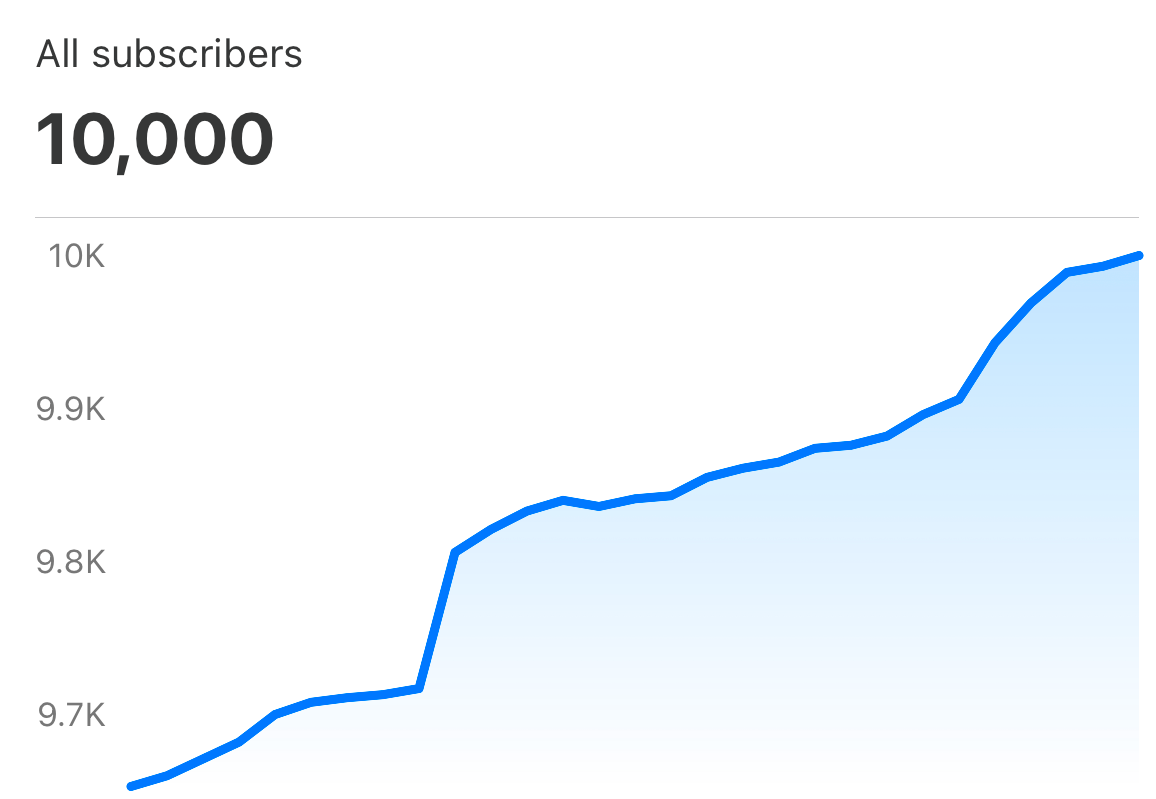
When I started AI Health Uncut 2.5 years ago, I couldn’t imagine I’d reach this number. And I’m so proud that every single one of you signed up yourself. No artificial email list injections. None of that BS. I literally had zero subscribers on August 28, 2023.
Wow. Just wow.
What started as a hobby turned into something I genuinely love doing.

Publishing 139 articles in 130 weeks means I’ve averaged a little over one article per week. And as you’ve probably know, many of those aren’t casual takes. They’re typically hardcore investigations and heavy research pieces. I gather data, track sources, and conduct interviews - all at once.
Time flies when you’re tearing down broken systems. Looking back, a lot has been accomplished, but there’s still a mountain to climb.
I launched this newsletter with 3 goals:
1️⃣ Address U.S. healthcare problems and offer solutions. To the extent possible.
2️⃣ Deliver the brutal truth about healthcare - technology, AI, innovation, investments, fraud - because too many people are scared to.
3️⃣ Offer value that my readers can’t just pull from ChatGPT. (Which, by the way, is probably why ChatGPT is itching to train on my content. 😉)
I hold other healthcare writers to the same high standards.
Let’s keep pushing.
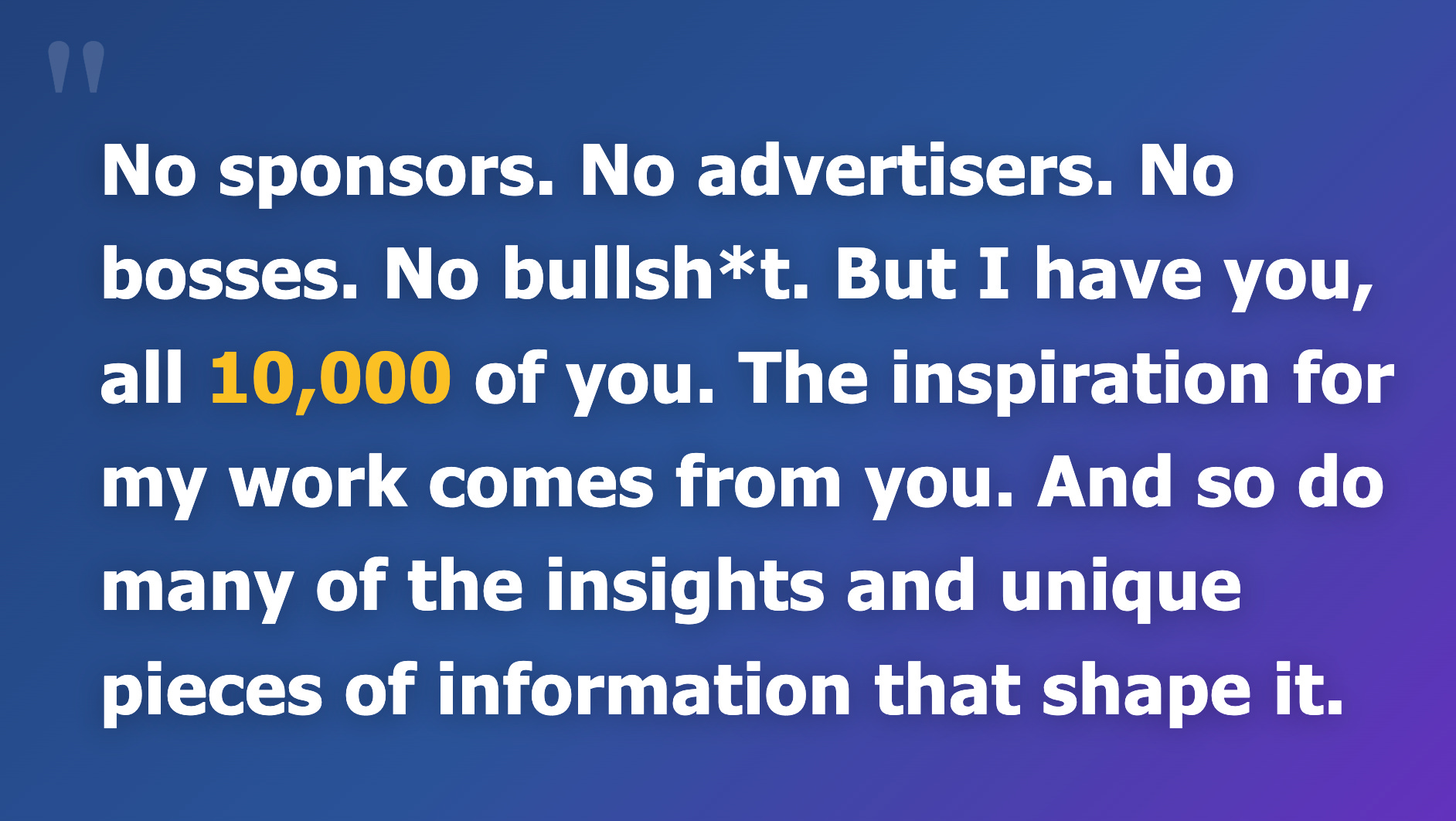
No sponsors. No advertisers. No bosses. No bullsh*t. But I have you, all 10,000 of you. The inspiration for my work comes from you. And so do many of the insights and unique pieces of information that shape it.
I write with no strings attached - just the brutal truth drawn from my experience and expertise.
Now, because I don’t have sponsors or advertisers, I owe a massive debt of gratitude to my paid subscribers and especially the Founding Members. The Founding Members Club is an exclusive group of 19 right now, and I know every single one of their names. These folks aren’t just supporting my work. They’re covering the tab for those who can’t afford a paid subscription, like students:
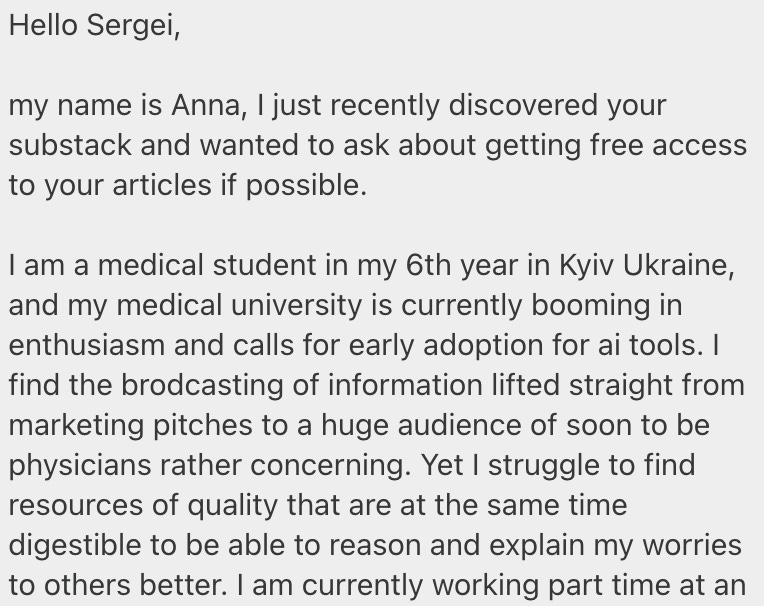
In fact, almost all my writing is now geared toward my paid subscribers (hundreds of them) and my Founding Members (19 of them). They put their money where their mouth is, and I’m working toward producing high-quality, sometimes provocative, but always evidence-based research on healthcare AI and everything around it. That includes AI modeling, AI fine-tuning and testing, healthcare AI product reviews, investing, regulations, policy, fraud investigations - topics I talk about in more detail below.
I believe in fair compensation for every piece of work. So, to those who’ve stepped up as paid subscribers: thank you. 🙏 If you’re not a paid subscriber yet and you want my relentless research and analyses to continue for another 12 months, 24 months, 36 months, and more, consider joining the ranks:
Here is what I’m offering:
For Paid Subscribers:
Full access to posts and archives
Post comments
Join the community
Subscriber-only chat
For Founding Members:
Everything above, plus:
Priority in direct messaging
Shaping future topics
A 45-minute 1-on-1 call with me
I will donate 5 paid subscriptions to those who cannot afford it
For free subscribers:
Occasional free posts (like this one 🙂)
I’m proud to say that every single person getting my newsletter chose to subscribe. And if they ever want out, they can unsubscribe with a single click. That’s how it should be - no tricks, no spam.
On August 28, 2023, I set out to publish bi-weekly (once every two weeks). Turns out, I ended up publishing weekly. Some people churn out content several times a week. Honestly, I have no clue how they pull it off. For the high-quality research I aim for, I need time: days, weeks, months even. Take my Babylon Health fraud investigation, or the exposé on UnitedHealth’s and Semler’s flawed QuantaFlo device, a mess that turned out to be not just a financial scheme but one that physically harmed patients.. That took months to unravel.
Over this past 2.5 years, we’ve done a lot. AI model reviews, fraud investigations, countless digital health industry deep dives, navigating new policies from CMS and the regulators, exposing private equity and venture capital scams, and doing multiple interviews. I also published an academic paper on best practices for implementing AI in clinical settings and have done multiple speaking engagements - largely thanks to my Substack and your support.
To be honest, when I started writing 2.5 years ago, I didn’t expect such an overwhelming response from so many people.
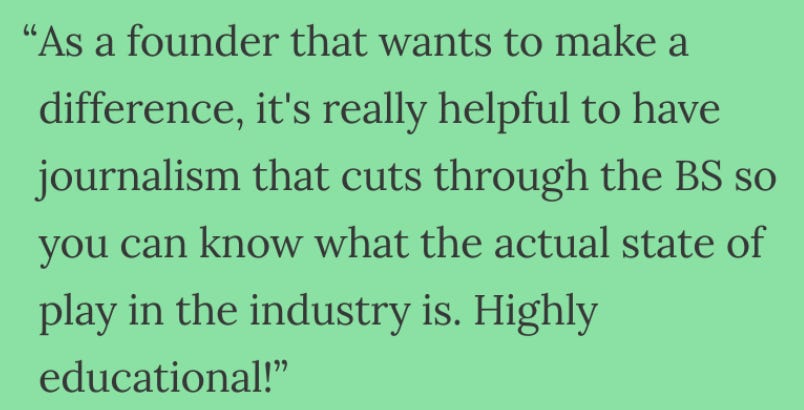
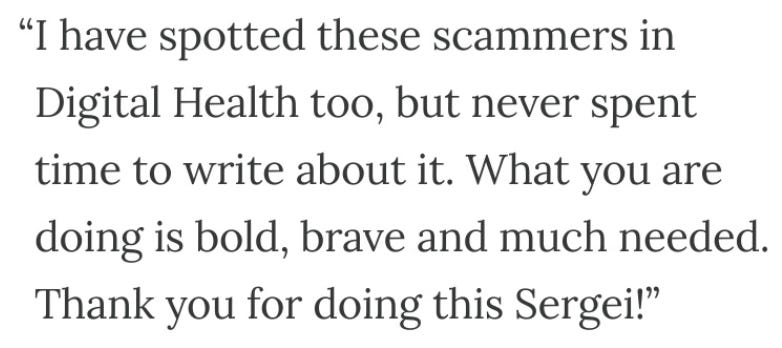
Here’s just a small sample of some of the comments I’ve received:
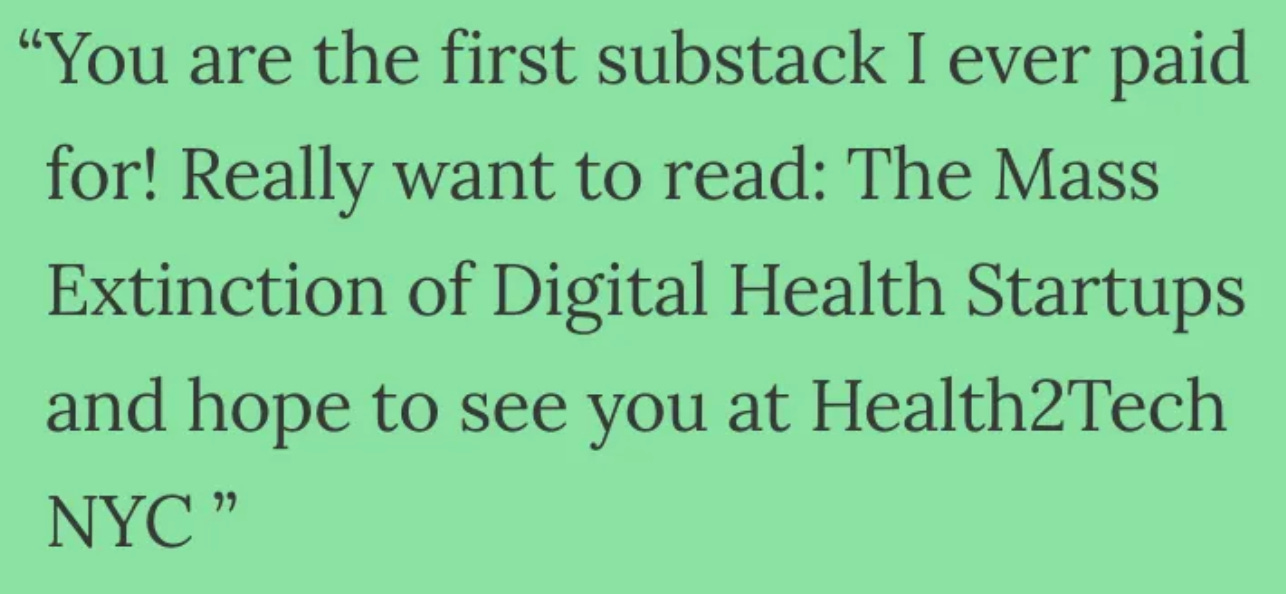

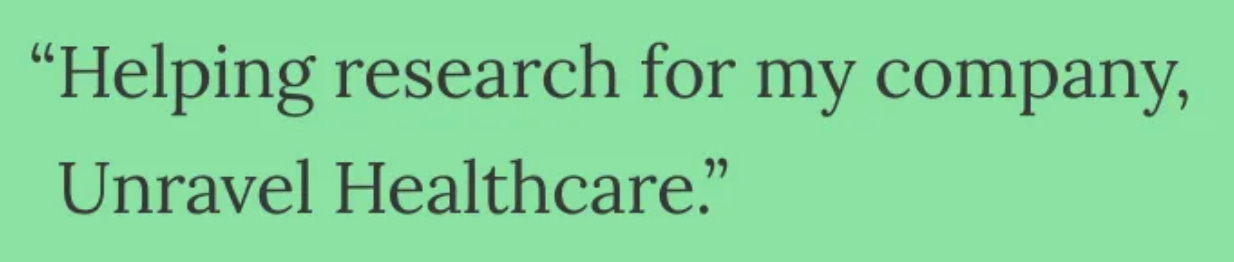
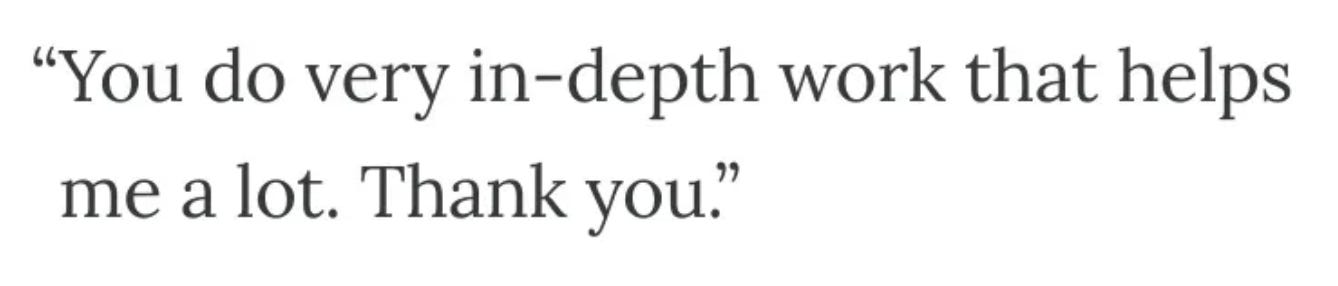
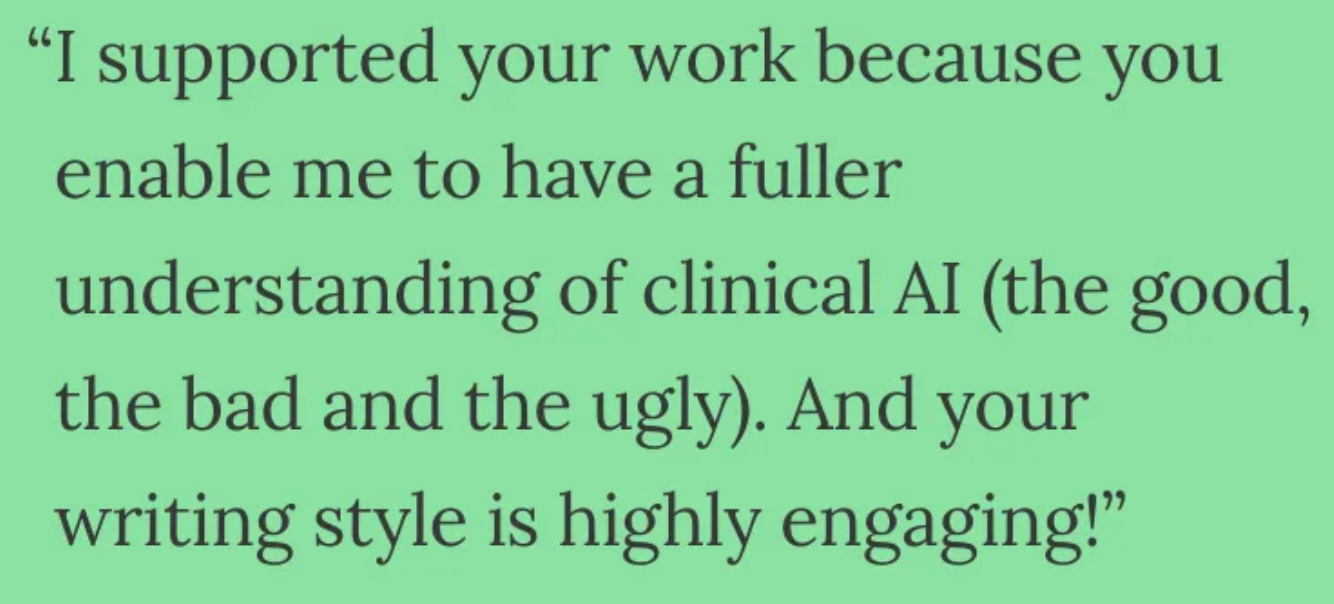
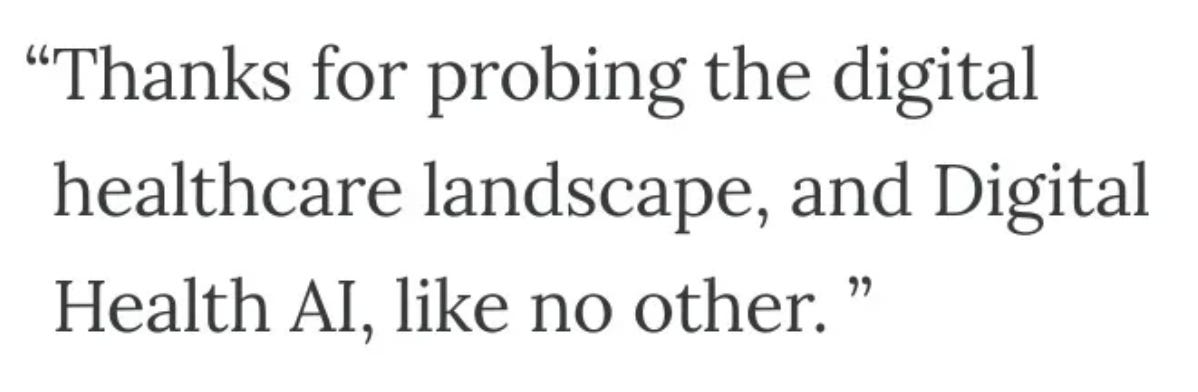

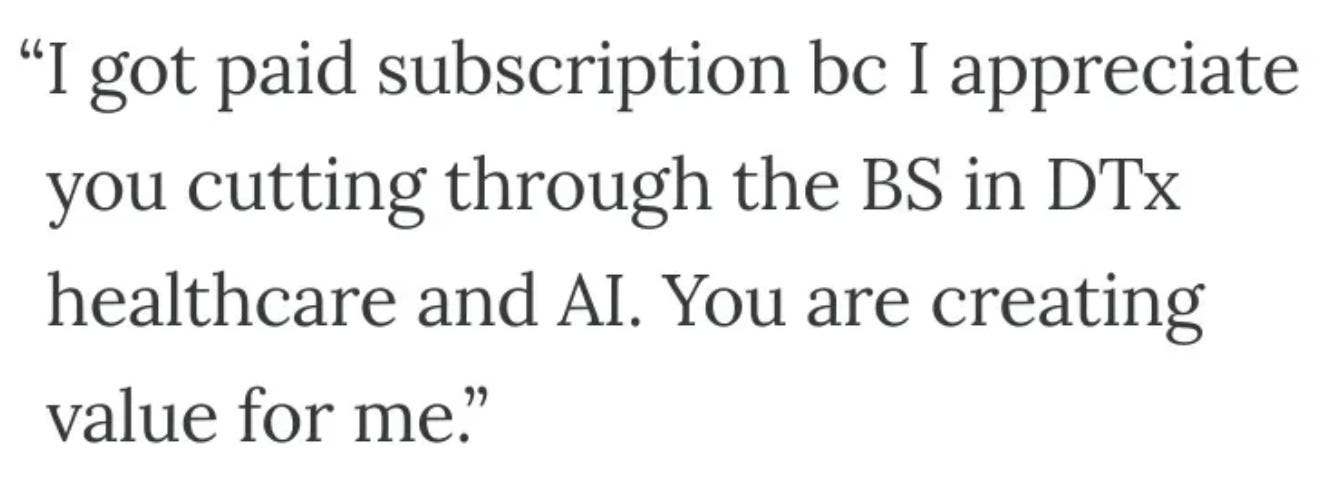
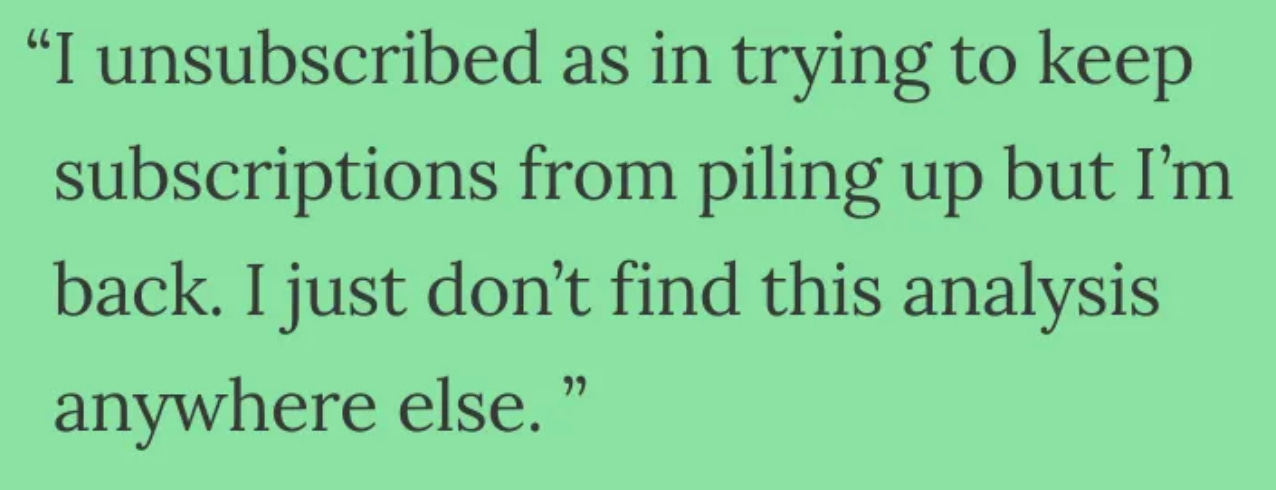
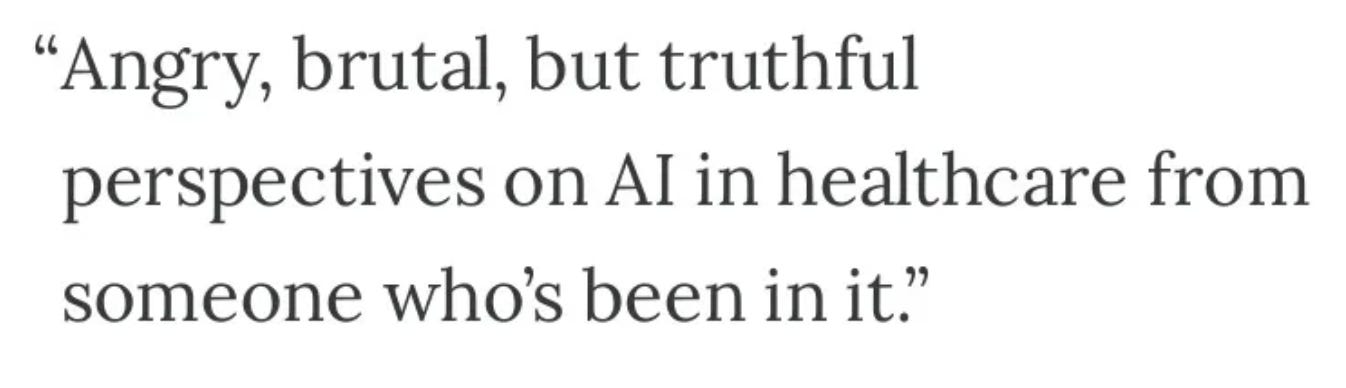
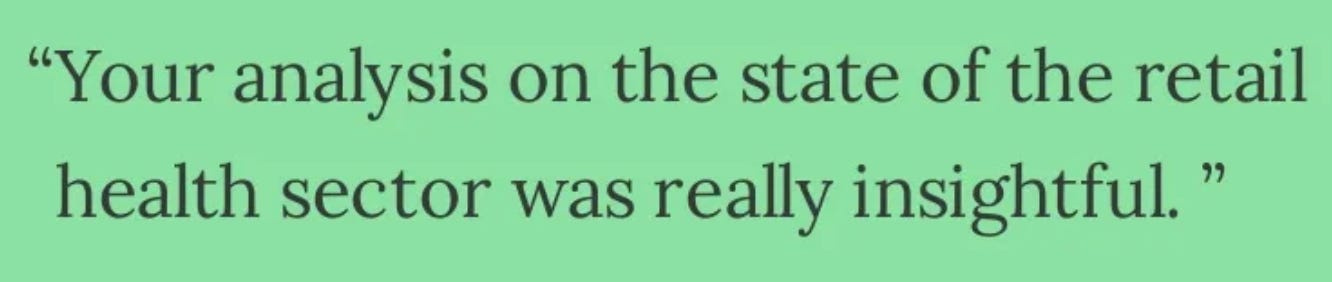
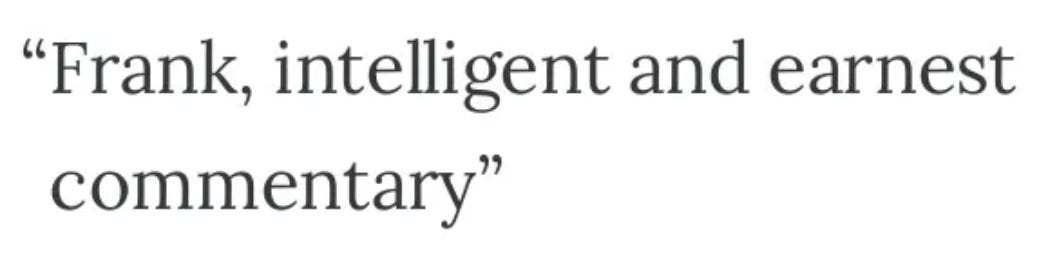
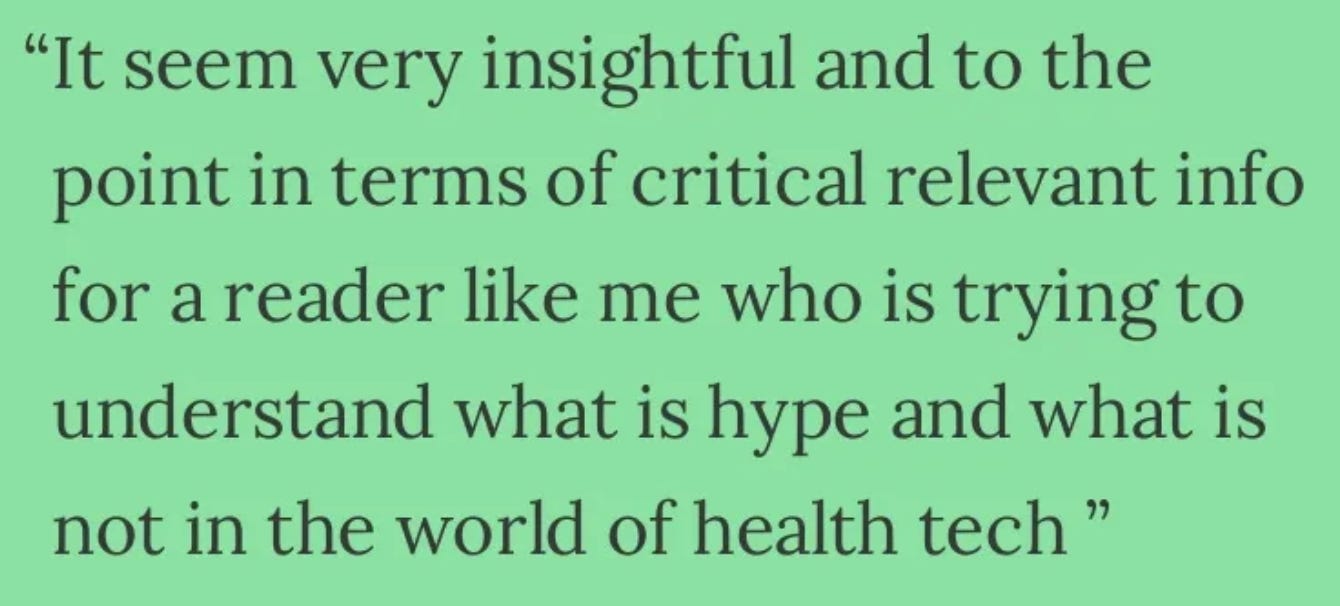
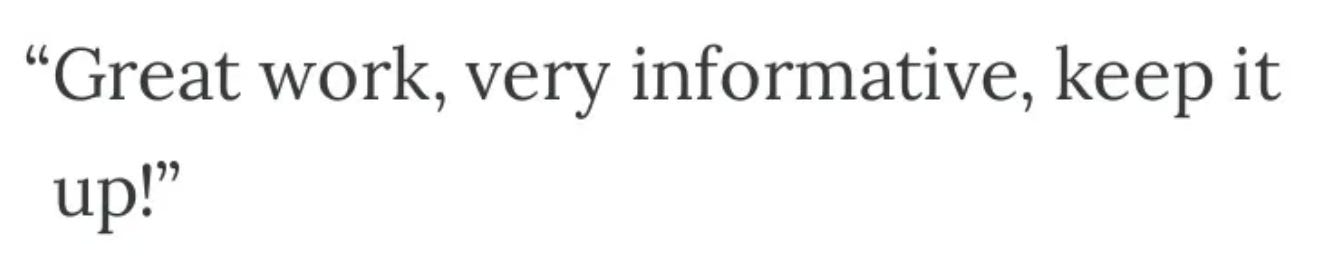

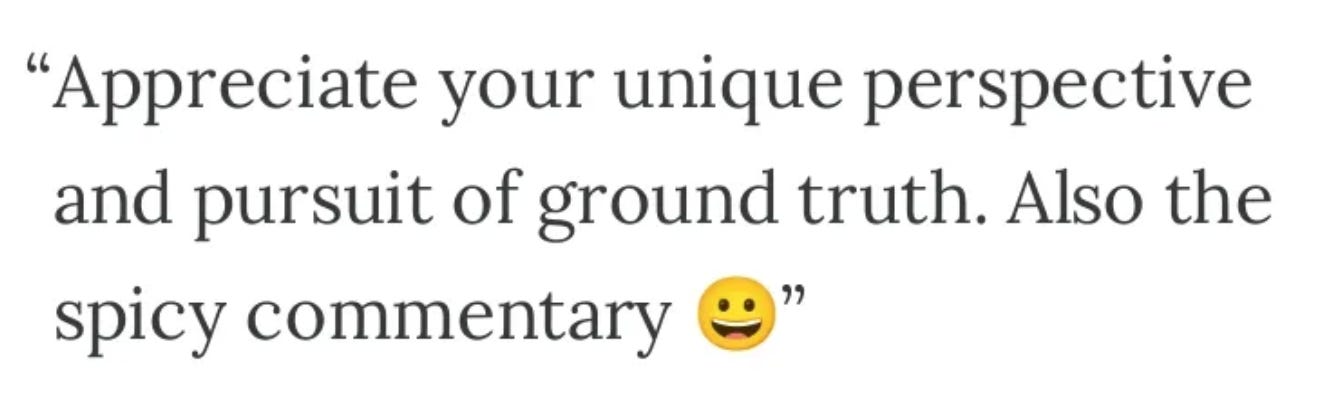
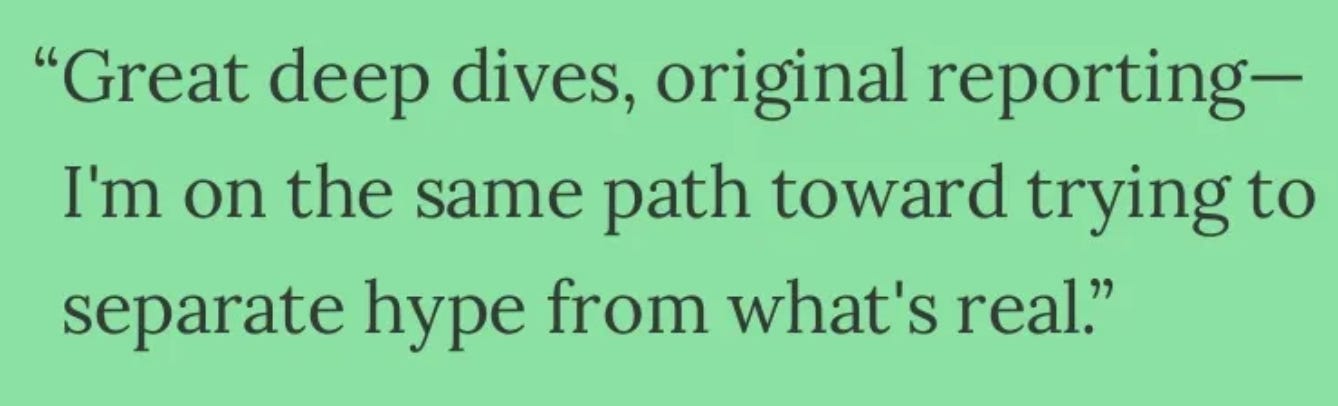
I’m flattered, and I’m honored. Thank you! 🙏
I aim to instigate and to provoke discussion in every piece I write, often by playing devil’s advocate.
I do appreciate my 10,000 subscribers. But to be frank, I don’t give a damn about subscription trends. I don’t obsess over them. If people find value in what I’m offering, they’ll subscribe and spread the word. But wasting time on SEO optimization and all that crap? That’s not my game.
What I do care about is finding allies in my mission to address and offer solutions to U.S. healthcare problems.
Now I want to highlight the most crucial insights, hard-hitting analyses, and relentless investigations I’ve uncovered over the past 2.5 years.
TL:DR:
1. Best Practices and the New Hippocratic Oath
2. Healthcare AI Product Reviews and AI Model Critiques
3. Unmasking Digital Health Failures
4. Investigating Healthcare Ponzi Schemes and Fraud, and Calling for Policy Implementation
5. When Media Is In Bed With Venture Capital
6. Exposing VCs’ Dirty Tricks and Proposing Alternatives
7. AI Health Uncut (aka FixHealth.ai): A Platform for Spreading the Word and Building a Thriving Healthtech Community
8. What My Subscribers Should Expect Next
9. See Something Unusual in Your Organization? Speak Up. Anonymously or Not.
10. Let’s Fix American Healthcare
1. Best Practices and the New Hippocratic Oath

🔵 I was upset that there wasn’t a unified framework for best practices in clinical settings. So I did what any frustrated academic would do—I took matters into my own hands. I spent months buried in over 200 academic papers, survived the grueling peer review massacre, and finally published a paper on Best Practices of AI in Healthcare. If we’re serious about letting AI help U.S. healthcare, we need to make damn sure we do it ethically and responsibly. I break down the whole journey in this Substack article.

🔵 I was proud to join nationally recognized clinician Eduardo Vadia, MD, in helping create a new Hippocratic Oath in an Age of AI.
2. Healthcare AI Product Reviews and AI Model Critiques
🔵 I’ve conducted critical reviews of state-of-the-art (SOTA) medical AI models, including Google’s Med-PaLM 2 and Med-Gemini, and OpenAI’s o1 ‘Strawberry,’ which was nowhere near ready for medical diagnostics despite the company’s bold claims, as well as OpenAI’s gpt-oss, which wasn’t suited for healthcare due to fine tuning issues and an overreliance on its HealthBench dataset.
🔵 I’ve analyzed various Big Tech attempts to wander into the healthcare industry, such as OpenAI’s HealthBench project and Microsoft's so-called Medical Superintelligence healthcare AI agent project.
🔵 I debunked a widely circulated JAMA article authored by over a dozen Stanford researchers that claimed AI outperformed human doctors. They made elementary, middle-school-level statistical mistakes to support those claims. Unfortunately, by the time I exposed the flaws, respected outlets like the New York Times and CNN—as well as renowned industry figures like Eric Topol, Bindu Reddy, and Elon Musk—had already picked up the clickbait and run with it. That was quite a debacle. 😉

🔵 I put ChatGPT Health to the test by uploading my entire medical history. I also wrote that Microsoft partnered with HealthEx and rebranded its legacy health app as Copilot Health.

🔵 Dr. Peter Farag and I recently ran a horse race between 13 state-of-the-art LLMs. 12 of them failed simple medical reasoning.
🔵 I’ve identified 10 obstacles the healthcare industry must overcome if we want physicians to trust and adopt AI in medicine.
3. Unmasking Digital Health Failures
🔵 Over these 2.5 years, I’ve uncovered around 50 recent digital health failures, and the common themes are glaring. These aren’t just mistakes. They’re wake-up calls. If we want to avoid screwing up the future of healthcare for our kids, it’s time to take a hard look and learn from these colossal disasters.
🔵 I’ve exposed the following perpetrators. This is just a selected list: Babylon, VillageMD, Walgreens, Oak Street (this one started as a LinkedIn post but set off a firestorm in the comments), Olive AI, Teladoc, Livongo, Amwell, Summa Health, Cigna, Oscar Health, Clover Health, Optum’s Telehealth, Optum Ventures, Walmart Health, Cue Health, Truepill, Pieces Technologies, IBM Watson Health, Epic, Suki, Infermedica, Sniffle, Isabel, MayaMD, Klick Labs, OpenEvidence, HealthPrecision, eMed, Cancer Check Labs, Hippocratic AI, Commure, and Doctronic.
🔵 In particular, I’ve dissected the corpses of digital health failures and extracted some cold, hard truths: the death of Olive AI, the Teladoc-Livongo debacle, a masterclass in vaporizing wealth, transferring billions from Teladoc’s retail investors to 7wireVentures and other VCs. The final nail in the coffin for telehealth as we know it, highlighted by Optum’s telehealth disaster and Amwell’s slow death spiral. Oscar Health and Clover Health are proving that insurance can still be a graveyard. Walmart Health? A Titanic that never left port. And let’s not forget Cue Health—taken out by a textbook illegal VC pump-and-dump scheme. Even Epic, the healthcare IT fortress, is vulnerable to Russian hackers. Welcome to the brutal reality of digital health.
🔵 I’ve exposed 15 Health AI companies that have been lying about what their AI can do.
4. Investigating Healthcare Ponzi Schemes and Fraud, and Calling for Policy Implementation
🔵 As a digital health founder, I dodged the SPAC attack when it was raining down on the industry a couple of years back. SPAC (Special Purpose Acquisition Company) was a glorified ‘blank check’ Ponzi scheme, exploiting Covid chaos while the U.S. government had its back turned. The SEC eventually woke up, but not before the ‘SPAC King’ himself, Chamath Palihapitiya, cashed in and turned into an overnight billionaire by cheating retail investors out of their hard-earned savings.
🔵 I spent months on my Babylon Health investigation, and what I found was staggering. 16 signs of potential fraud, 17 outright lies from Ali Parsa, Babylon’s CEO, and 22 hard lessons for the digital health industry. But the most jaw-dropping moment? In early 2022, CMS handed Babylon a check for $1B(!)—money that U.S. taxpayers entrusted them with! Why? Because some slick salesman named Ali Parsa (who had barely set foot in the U.S.) convinced them it was a good idea, before Babylon had even done anything. The CMS $1B check was an advance!
And of course, after running multiple companies into the ground (there was Circle Health before Babylon) this guy has the nerve to launch yet another AI health startup, this time called Quadrivia. And who’s he pitching to? The very same VC firms whose LPs just watched him incinerate their money. But hey, why not? It’s not VCs’ money anyway. It’s someone else’s money. So let the freak show keep going until the music finally stops.
🔵 Speaking of Theranos, Babylon, and AI agents, I ran a deep investigation into a startup called Hippocratic AI (though “Hypocritical AI” might be more fitting 😉) that has raked in a total of $404M from VCs, on the promise that someday they’ll build AI agents for medicine. Will they deliver? Who knows. But does it even matter? Not really, as long as the cash keeps flowing. The company’s CEO, Munjal Shah, has reportedly faced seven lawsuits for fraud at his previous venture, Health IQ. (By now, my readers should know the pecking order in the Healthcare VC Mafia, where Shah is a Made Man (a Soldato) answering directly to the Godfather himself, Hemant Taneja.) But does this concern the VC bros? Not in the slightest. Once you’re in the mafia, you’re part of the “family.” In fact, Shah began raising funds for his new “medical agentic” startup before the bankruptcy trial for his last company even started!
When you hear, “We’re building AI agents,” it’s probably just smoke and mirrors.
🔵 I’ve been banging on the doors of Congress, targeting those who supposedly care about healthcare, to expose the predatory practices of private equity in the sector. And by the way, venture capital has jumped into the fray, too. Turns out, private equity has been playing a rigged game for decades, thanks to massive legal loopholes.
🔵 Case in point: Hemant Taneja, CEO of General Catalyst, and The Godfather of the Healthcare VC Mafia. This guy pulls off a stunt right out of the Gordon Gekko handbook—bought a hospital he couldn’t afford by borrowing a cool billion and dumping the debt onto the hospital’s balance sheet. To pull off this magic trick, he created HATCo, a shell company hilariously claimed to stand for “Health Assurance Transformation Corporation”. But let’s be real. The name is likely a nod to Hemant Taneja’s own initials. It’s straight out of the playbook of those narcissistic S&L CEOs from the 1980s who loved plastering their initials on their companies’ market trading tickers, much like a certain president. 😉
In my public comment to the Federal Trade Commission (FTC), Department of Justice (DOJ), and Department of Health and Human Services (HHS) about Consolidation in Health Care, I argue that what Mr. Taneja and General Catalyst are doing is a Ponzi scheme. By creating a shell company to dodge potential bankruptcy inquiries and shoving all this debt onto someone else’s books, they’re playing a high-stakes game of financial Jenga.
After I wrote the original article about his slick Gordon Gekko-style leverage scheme, Taneja, of course, kept inventing new semi-legal schemes to stuff his own pockets. Enter “GC Wealth,” a founder extortion racket now valued at a whopping $2.3B. Taneja pitches it as a service for founders, entrepreneurs, and those who’ve “struck it rich (or have the potential to)” in hot sectors like AI. But let’s be honest: this is damage control disguised as diversification. With the firm’s fund performance floundering, long-term sustainability is in question. So instead of just burning LPs’ capital (their usual business model), they’re now going after the personal fortunes of the very founders they fund. That, to me, is the textbook definition of a Ponzi scheme.

🔵 Probably my biggest fraud investigation to date has been into a flawed PAD testing device called QuantaFlo, produced by Semler Scientific, a publicly traded company, and used by UnitedHealth. This device alone generates around $1B per year for UnitedHealth through upcoding profits, and it has actually caused physical harm to patients. In response to the DOJ’s call, I submitted my public comment to regulations.gov (tracking number MB4-LOHP-8ZO1) detailing the harmful practices of UnitedHealth and Semler Scientific.
🔵 I’ve also pulled back the curtain on healthcare’s most egregious oligopolies: Cigna’s CEO pocketing a cool $1B, UnitedHealth skimming $50B off Medicare with upcoding fraud, and Walgreens making the worst deal in its 123-year history with the VillageMD acquisition. And let’s not forget UnitedHealth’s AI, which managed to prioritize care for healthier white patients over sicker Black patients, screwing over 100 million lives in the process.
🔵 And I’ve posed a provocative question to policymakers: Why the hell would doctors accept AI if, when an AI makes an error, doctors goto jail, engineers don’t.

🔵 One of my recent investigations was focused on eMed, a shadowy “digital health” outfit turned GLP-1 reseller (like everyone else these days 🙄), whose orbit keeps intersecting with names like Ali Parsa and Charlie Javice, with Javice’s fraud sentencing set for next month in the U.S. District Court for the Southern District of New York. Then there is Linda Yaccarino, out as CEO of X/Twitter, whether by choice or by push, and now installed as CEO of eMed. And of course, our boy Tom Brady, eMed’s freshly minted “Chief Wellness Officer,” who would literally do anything for a payday, even signing a contract with Michael Ferro, who runs eMed and is disgustingly deep in the Epstein network.
The more I dig, the more eMed looks like a glossy front end for something strange happening offstage. 🤷
5. When Media Is In Bed With Venture Capital
🔵 I’ve exposed how corporate media, especially Forbes, is in bed with VC bros and neglects the real problems in healthcare. Forbes seems more interested in promoting the biggest and most influential venture capital firms based on their brand names rather than their actual impact. I break down why Forbes’ VC rankings are fundamentally flawed.
🔵 Some people pointed out, “Well, you’re so smart criticizing others. Why don’t you offer your own?” And that’s exactly what I’m planning to do: offer my own VC rankings based on their long-term success (well, mostly the lack of it 😉) in digital health.
I keep hearing VCs scream during interviews and from the stages of overpriced conferences, “We are here to invest in generational companies,” whatever the hell that means. Well, if you’re truly here to invest in generational companies (and not just pump and dump the moment a secondary or an IPO presents itself) then let’s see what the data says.
Of course, we all kind of know the answer. But I still want the data to speak.
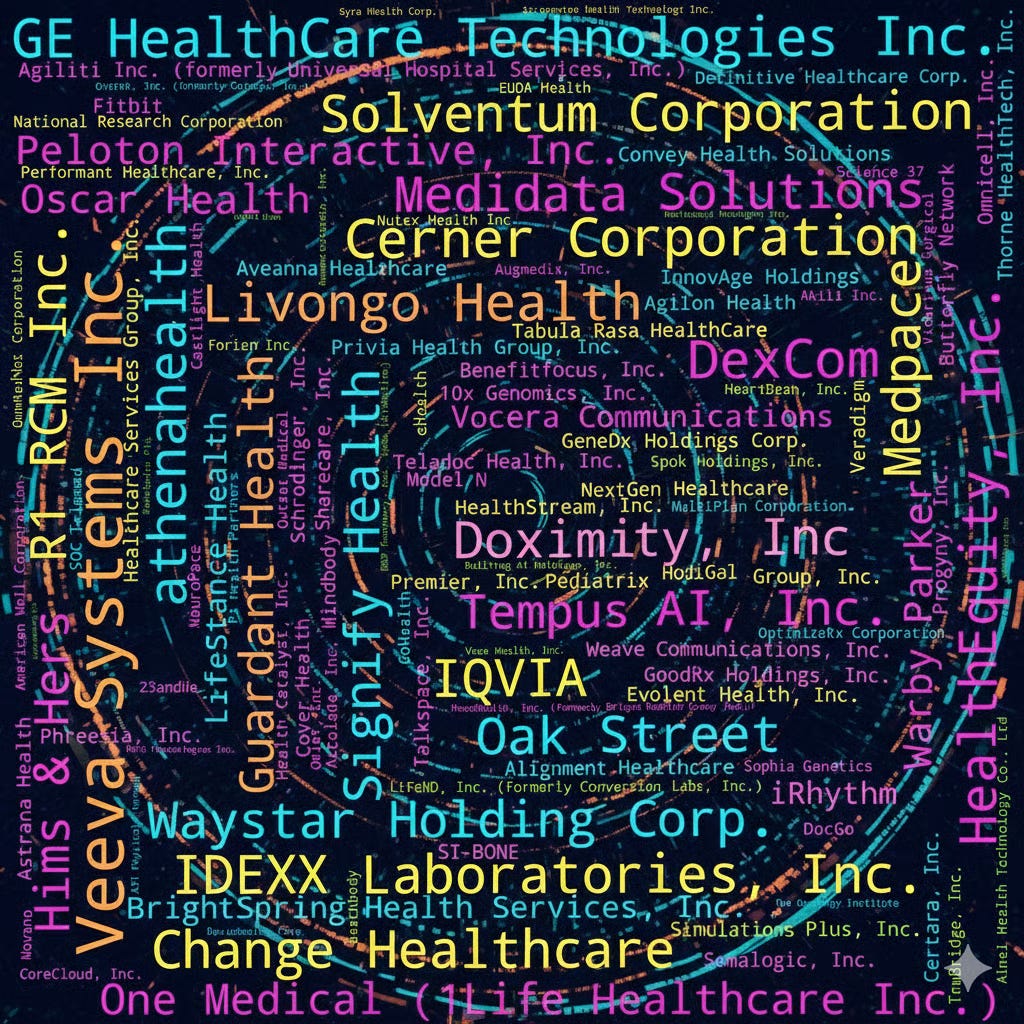
Fortunately, I support the largest dataset of publicly traded digital health companies.
6. Exposing VCs’ Dirty Tricks and Proposing Alternatives
🔵 I’ve used data to explain here, here, here, and here how venture capital has destroyed digital health—not just by burning tens of billions in LPs’ investments, but by leaving medical communities, customers, and founders in shambles.
🔵 I explain why VC-backed companies are heading for the fewest U.S. IPOs in over a decade, especially in digital health. But I think you already know the reason. 😉
🔵 As an alternative, I’ve developed my own 21-point Health AI IPO Checklist. It’s your ultimate guide to separating the unicorns from the roadkill in the digital health IPO parade.
7. AI Health Uncut (aka FixHealth.ai): A Platform for Spreading the Word and Building a Thriving Healthtech Community
I’m eternally grateful to AI Health Uncut. It’s been a gateway to incredible people, ambitious projects, and some of the most energizing conferences in our field.
Quick announcement: If you’re looking for a provocative, no-filter speaker on the digital health industry or healthcare AI tools and models, DM me here on Substack or on LinkedIn. You won’t regret. 😉
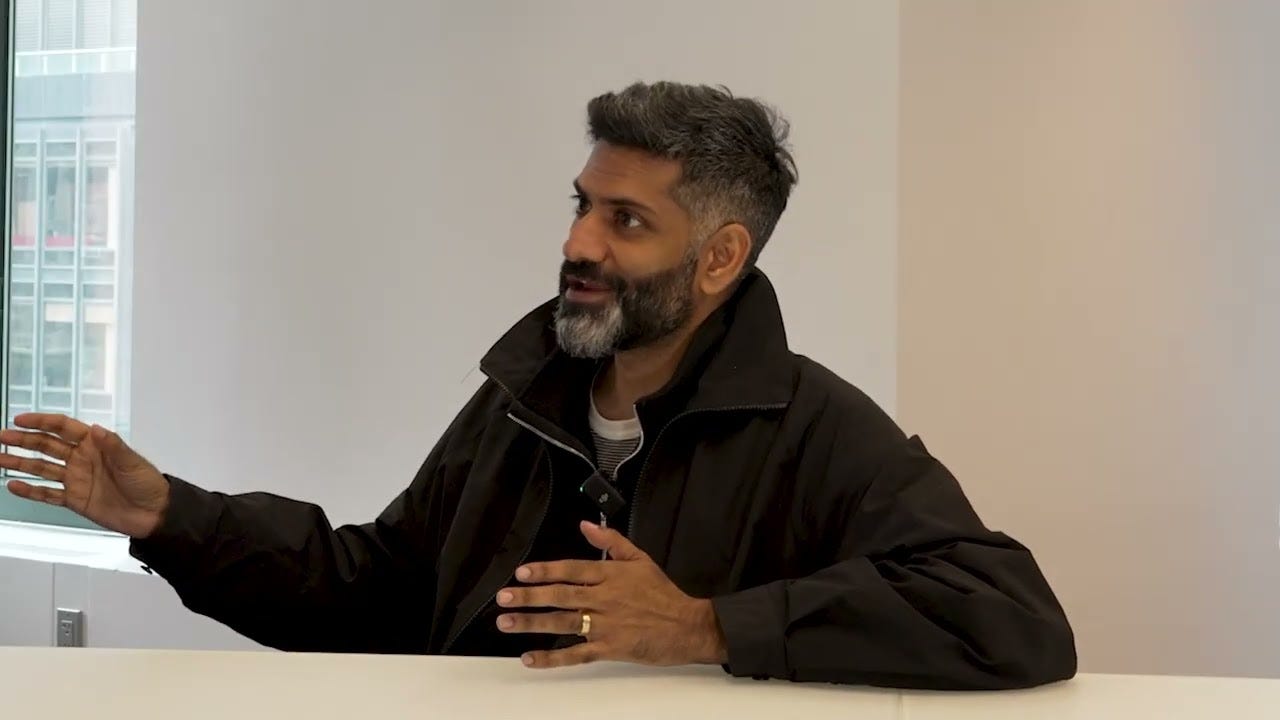
🔵 Digital Health Inside Out is an engaging and provocative podcast I co-host with my friend and fellow digital health expert, Alex Koshykov. Our latest episode, featuring Shiv Rao, CEO of Abridge, is about to drop.
🔵 On March 8, 2025, I had the honor of joining a panel at SXSW in Austin, TX, titled “Most AI Startups Are Doomed,” alongside distinguished co-panelists James Wang (Creative Ventures), Chidi Nwankpa (GlobalHealth AI), and Kartik Tiwari (Andromeda Surgical).
🔵 I was humbled to be invited to join the board of directors of Health2Tech, an organization building health tech and health AI communities across the U.S. and around the world through educational events and conferences. From NYC, Boston, Philadelphia, Chicago, Cleveland, Washington D.C., Miami, and Nashville to Tel Aviv — and expanding fast. I’m thrilled to work alongside true industry experts on this board: Alex Koshykov (founder), Bailey Morgan, Linda Alunkal, Audrey Guazzone, and Luca Caruso. If you’re interested in helping organize a Health2Tech event in your city, or can provide space for one, please reach out.
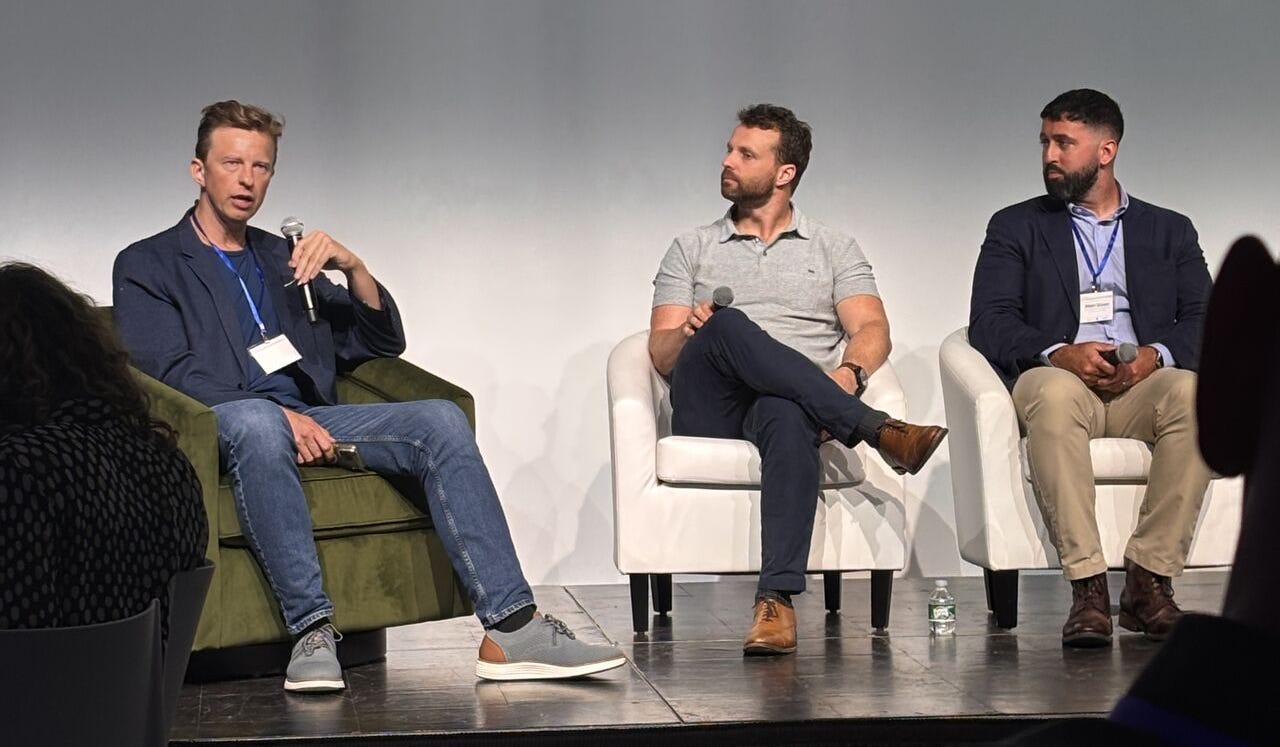
🔵 On September 11, 2025, I was moderating the panel “GenAI in Healthcare: A Conversation with Foundation Model Builders” at the Prax AI x Healthcare Summit in NYC.
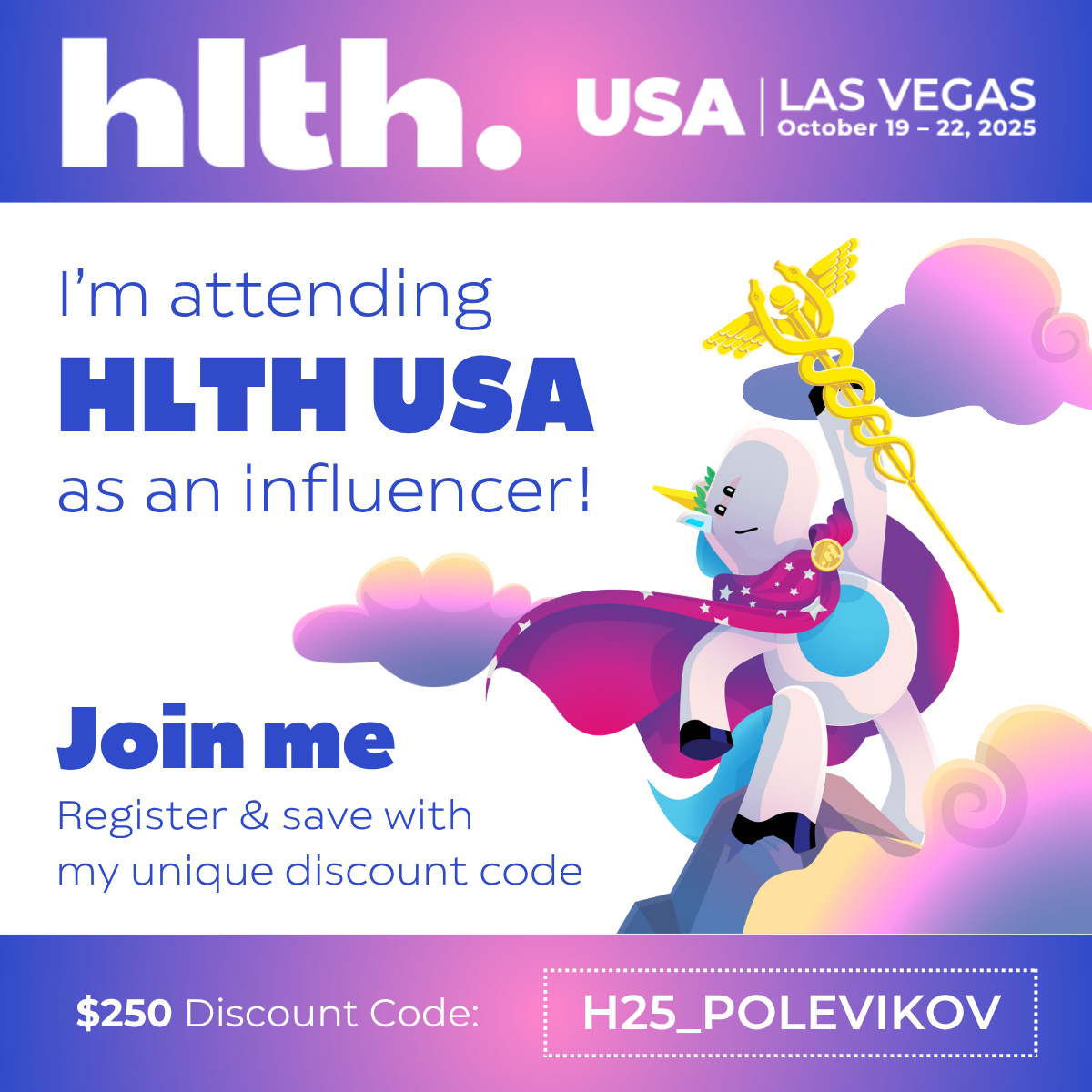
🔵 On October 19–22, 2025, I was attending HLTH USA in Las Vegas, NV — as an influencer, no less (don’t ask 🙄).

🔵 On October 28, 2025, I was speaking at the Health AI Summit in Albuquerque, NM.
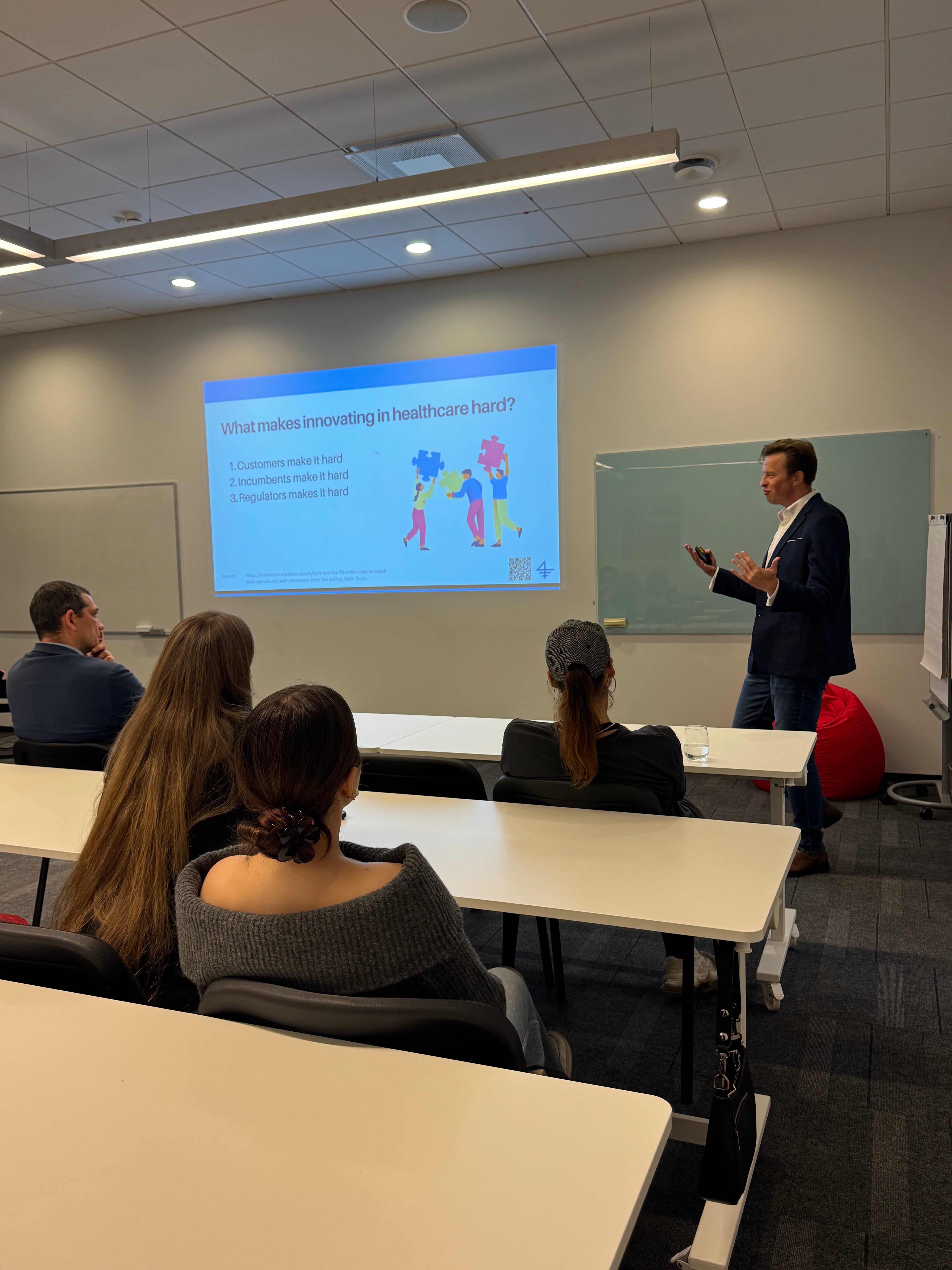
🔵 On November 12, 2025, I delivered a lecture at the European Humanities University (EHU) in Vilnius, Lithuania, as part of the Health2Tech event series. The lecture was titled “Paging Dr. Watson: Why Healthcare AI Is 20 Years Behind.”
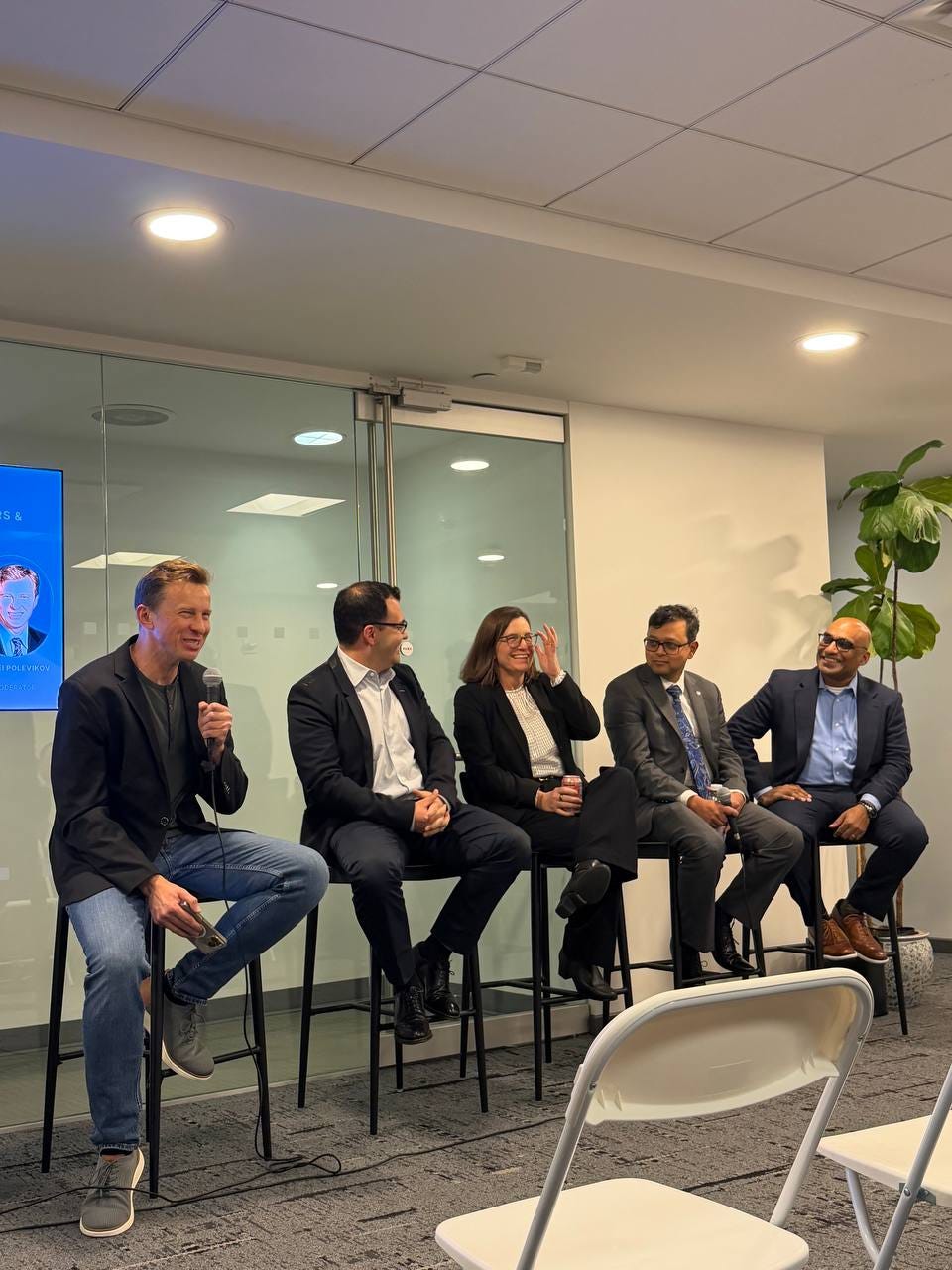
🔵 On December 4, 2025, I moderated a Health2Tech panel in New York City called “Clinically Useful, Not Just Cool: Tech Doctors & Nurses Will Actually Use.”
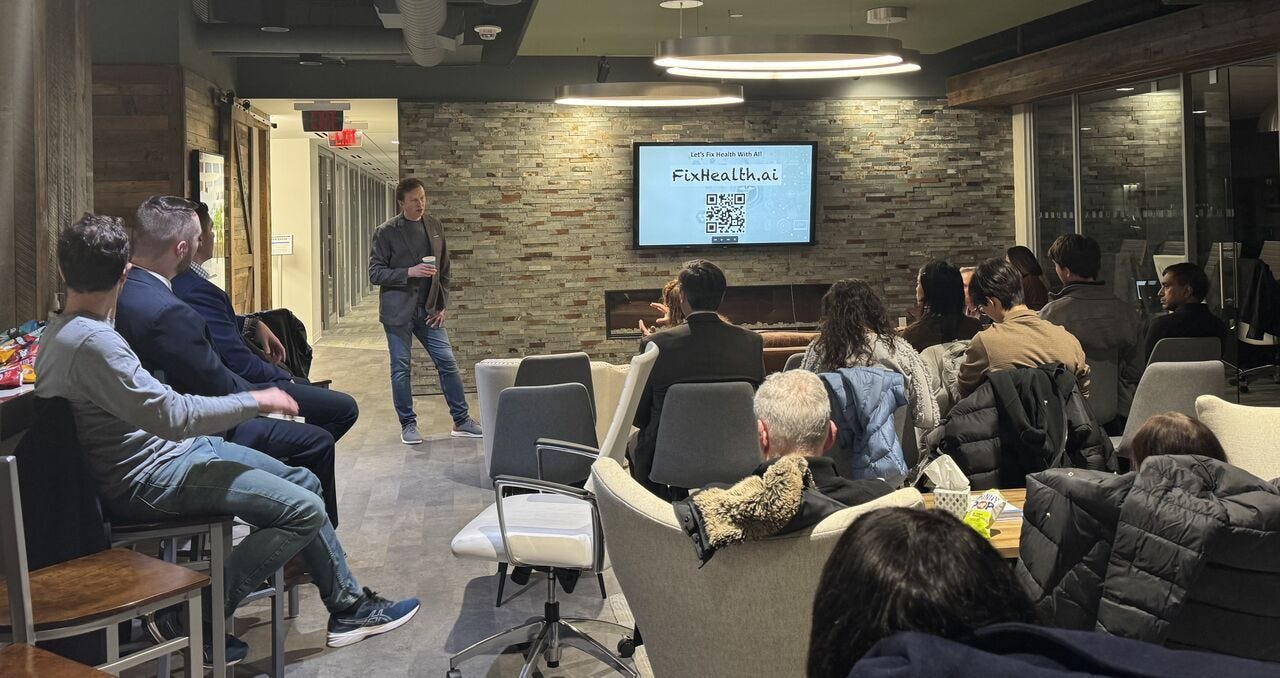
🔵 On February 17, 2026, I gave a talk at the Philadelphia Health2Tech event titled “Most VCs Game the System: A New Methodology to Measure Skill in Health Tech Investing.”
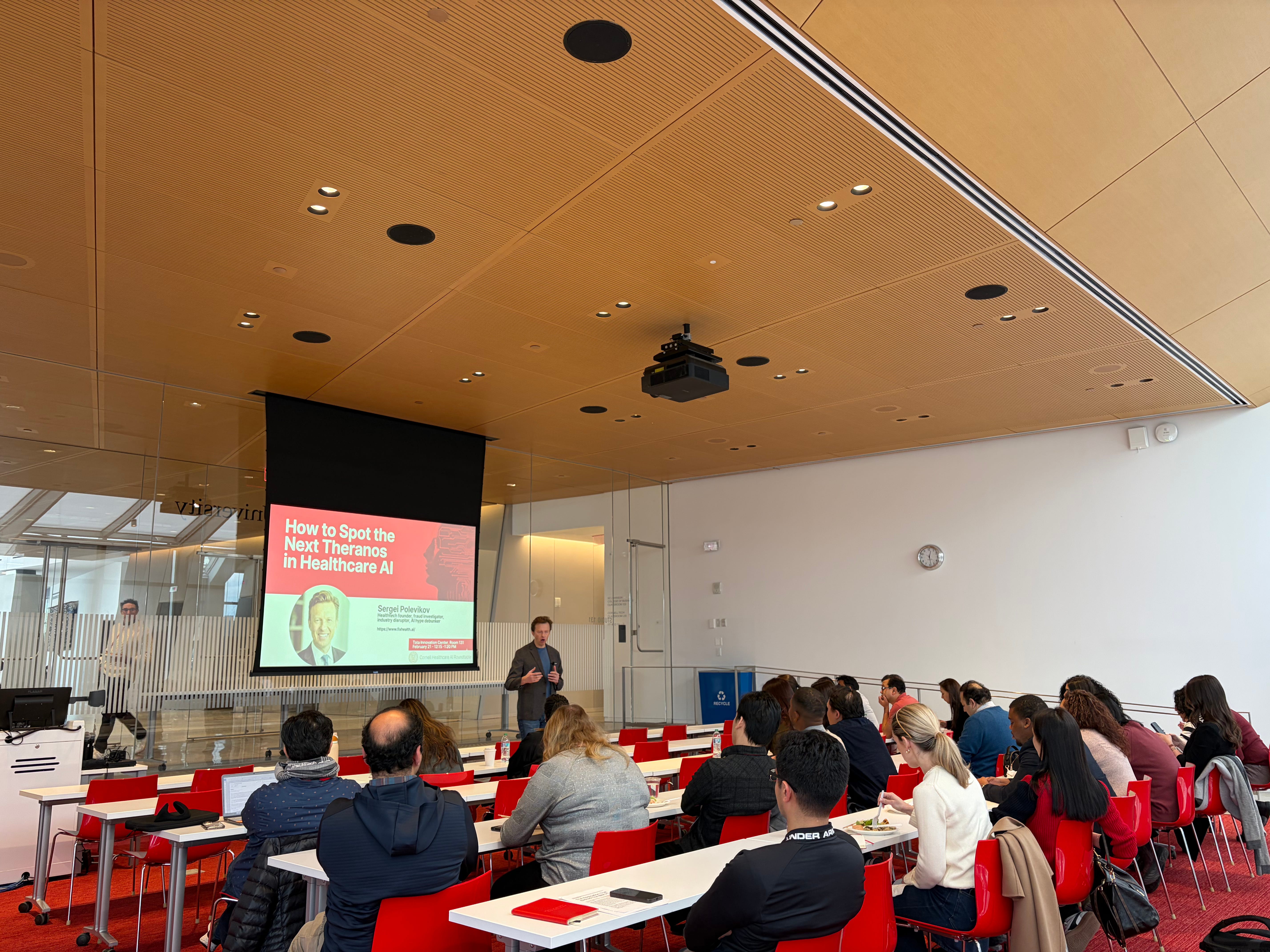
🔵 On February 21, 2026, I gave a lecture to Cornell Executive MBA students titled “How to Spot the Next Theranos in Healthcare AI.”
🔵 On April 15, 2026, I will once again be speaking at the European Humanities University (EHU) in Vilnius, Lithuania, as part of the Health2Tech event series.

🔵 On June 8–9, 2026, I will be speaking at the Digital Health & AI Innovation Summit in Boston, MA.
8. What My Subscribers Should Expect Next
🔵 OK, so I just did a serious deep dive (possibly one of the deepest out there 😉) into the longevity industry. From gizmos and biomarkers to peptides, commercial products (yes, including AI), and the uncomfortable truth about why Americans are dying younger than the citizens of nearly every other developed nation. It’s one of my spiciest pieces yet 🌶️. And—drumroll please—that particular piece marked my 100th published Substack article!
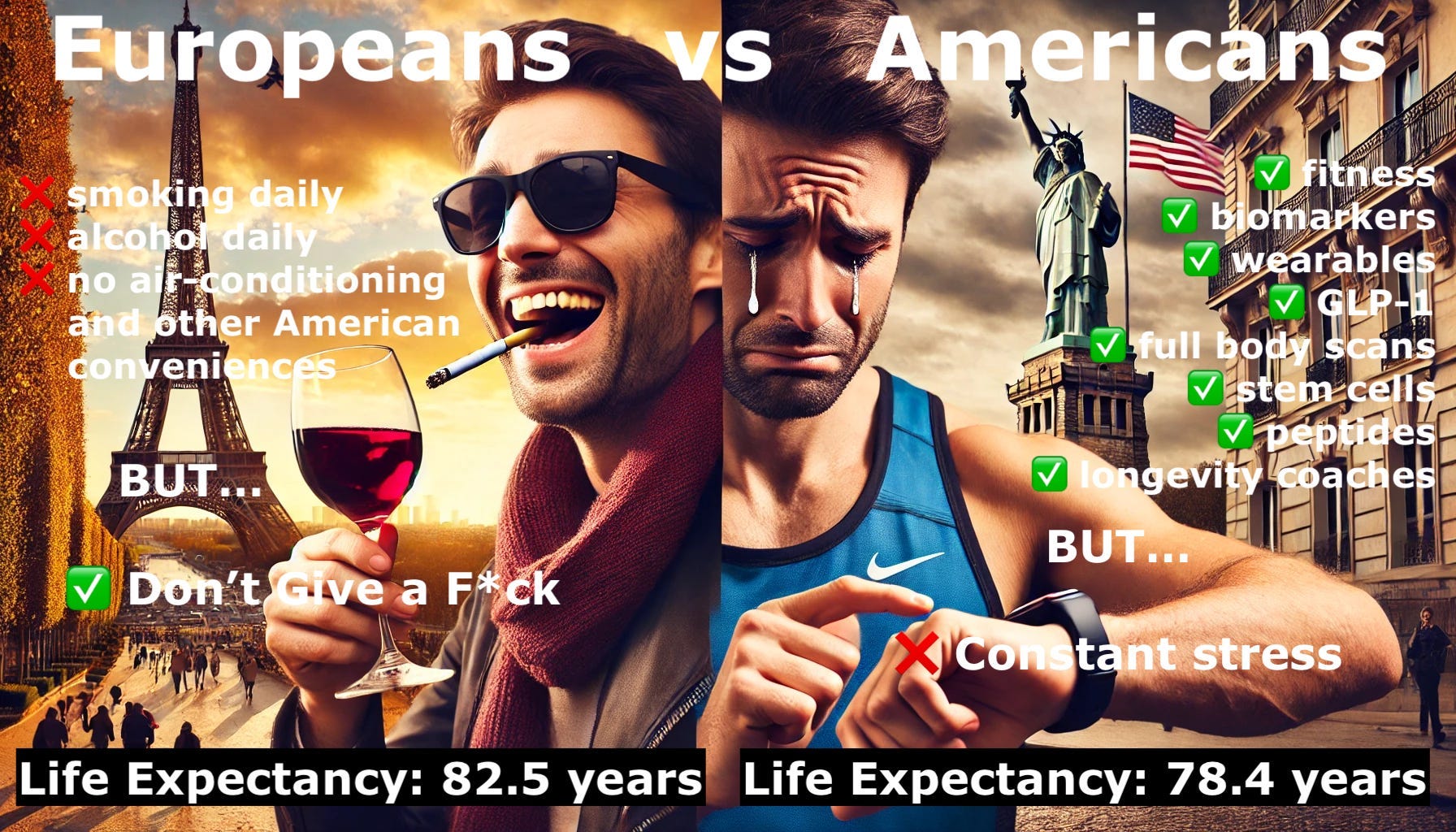
🔵 I’ll continue digging into healthcare AI companies. (So if you’re working at one, watch out. 😉) A few readers have asked, “Why only cover the bad actors? Aren’t there any good digital health companies?” Sure there are. And you can read about them in their press releases 🙂. But seriously, I’ll keep highlighting both the cautionary tales and the rare standouts actually doing meaningful work.
🔵 As I mentioned earlier, I’ve got a packed schedule of speaking engagements lined up for spring, summer, and fall. I’m building a body of work around a central theme: “Paging Dr. Watson: Why Healthcare AI Is 20 Years Behind.” It still blows my mind that industries like finance and manufacturing are two decades ahead of healthcare when it comes to AI. (Just a few weeks ago, I saw a receptionist faxing insurance forms. 🤷♂️) I’m unpacking the “why,” along with other themes and questions around healthcare AI, in over 100 slides.
🔵 I’ll also be sharing my letter to Pam Bondi, U.S. Attorney General, and to Marty Makary, Commissioner of the FDA, detailing what I’ve uncovered in my investigation into Semler’s flawed QuantaFlo PAD testing device, sponsored by UnitedHealth. I was completely speechless (though maybe I shouldn’t have been 🤷) that the DOJ reached a settlement with Semler in September 2025 for a ridiculously tiny amount, $37M combined total. I know how much physical harm this dangerous device, still used every hour of every day(!) by UnitedHealth, has actually caused patients. We need to get this device out of our healthcare system once and for all. Lives are on the line.
9. See Something Unusual in Your Organization? Speak Up. Anonymously or Not.
🔵 If you want to share your story, positive or negative, about your organization, please reach out. I’ve reported on dozens of companies and conducted hundreds of interviews with insiders and former employees. Everything stays confidential until the day I die.
🔵 Most importantly, if you’re being treated unfairly, bullied, or if you’ve seen something suspicious—whether it’s about the product, finances, or accounting—don’t stay silent. Speak up. Every major media outlet has an anonymous tip line. And if you’d like to reach out to me directly, you can do so via DMs on Substack, LinkedIn, or X. I’m fully independent, report to no one, and treat all information with absolute confidentiality.
10. Let’s Fix American Healthcare
🔵 I’ve been pushing my readers (everyone, really) to join me in fixing American healthcare. The system is a dumpster fire, and to extinguish it, we need your insights and your support. For example, I was able to expose so many problems and outright lies inside Hippocratic AI because people inside the company had the courage to speak up.
You can’t fix what you don’t understand, and right now, our healthcare system is a masterclass in dysfunction.
We’ve covered a lot of ground over these 2.5 years, but let’s be real: U.S. healthcare is still in deep sh*t. Until it isn’t, we keep grinding.
Your comments and thoughts, and especially your willingness to speak up from inside health tech companies, are the fuel that keeps this engine running.
So, do you think my work with AI Health Uncut is moving the needle? What needs to be improved?
I’m in this for the long haul, committed to fixing U.S. healthcare through AI and tech. Math, statistics, AI, and economics are my passion. But healthcare is my mission.
Here’s to many more years of pushing the needle forward! 🥂 Thanks for your support! All 10,000 of you. 🙏

👉👉👉👉👉 Hi! My name is Sergei Polevikov. I’m an AI researcher and a healthcare AI startup founder. In my newsletter ‘AI Health Uncut’, I combine my knowledge of AI models with my unique skills in analyzing the financial health of digital health companies. Why “Uncut”? Because I never sugarcoat or filter the hard truth. I don’t play games, I don’t work for anyone, and therefore, with your support, I produce the most original, the most unbiased, the most unapologetic research in AI, innovation, and healthcare. Thank you for your support of my work. You’re part of a vibrant community of healthcare AI enthusiasts! Your engagement matters. 🙏🙏🙏🙏🙏
Congratulations Sergei! This is an impressive achievement. I am awed and inspired by your prodigious output.
Congrats🐯💡!