


Welcome to AI Health Uncut, a brutally honest newsletter on AI, innovation, and the state of the healthcare market. If you’d like to sign up to receive issues over email, you can do so here.
Important Disclosure. I am an independent journalist with no financial interest, long or short, in any company mentioned here, including Anthropic, OpenAI, Amazon, OpenEvidence, Doximity, Wolters Kluwer, Rock Health, Epic Systems, Abridge, Walmart, General Medicine, Eli Lilly, Teladoc Health, Clarivate, Pathos AI, Suki, Oxbridge Health, and other. Opinions are my own. Not investment advice.
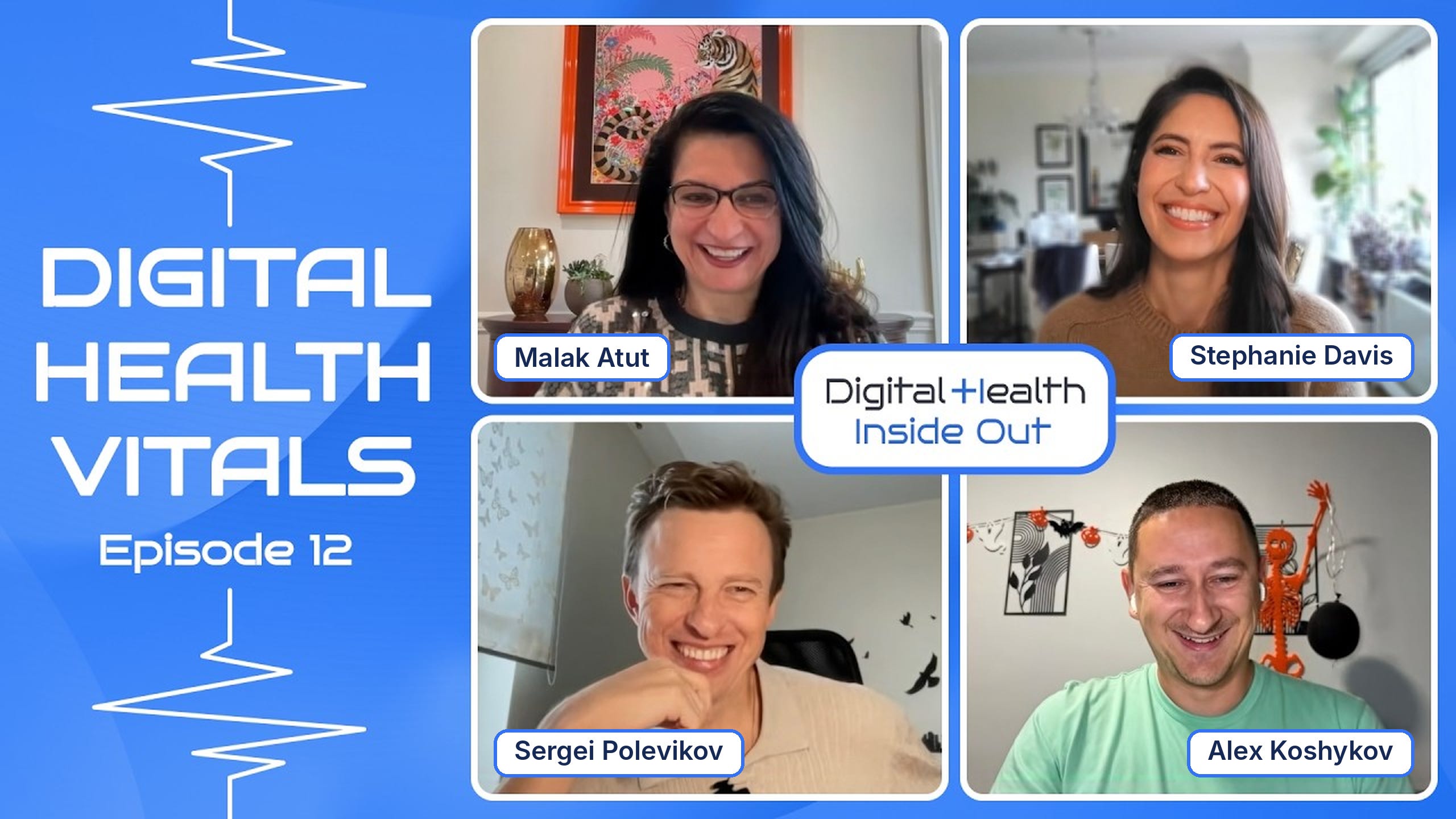
On Oct 28, Alex Koshykov, Stephanie Davis and I recorded the October Digital Health Vitals with special guest Malak Atut, a healthcare and AI founder, investor and advisor who teaches at Wharton. Everyone in this episode was looking for an exit. VCs still have no IPO window. OpenEvidence wants a buyer. Walmart wants to be the store. And Anthropic goes to the public markets as soon as next week, which is how Stephanie and I ended up with a bet we settle in 10 years. 😉
On a personal note, I’m all for heated, fierce debates. But I don’t appreciate personal attacks, and in my opinion, this discussion went too far. But don’t take my word for it. Watch the video and judge for yourself.
Watch the episode on YouTube or listen on Apple Podcasts. And here is September’s recap.
I’ll be at HLTH USA 2026 in Las Vegas next week, Nov 15 to 18, recording with Alex from the floor. Join me: https://app.ingo.me/q/56jqv
A word about how this work gets paid for. Independent investigative journalism comes at a significant cost, both in time and legal risk. That’s why I have launched the AI Health Uncut Sponsorship Program. AI Health Uncut’s subscribers include prominent leaders in healthcare, technology and investment, including household names you would undoubtedly recognize. Sponsorship puts your work in front of all these people, who help shape the industry’s direction, its funding and its adoption of new technologies. Sponsorship does not buy favorable editorial coverage. But I welcome like-minded sponsors who respect my editorial independence and don’t interfere with what I write.
I also encourage my readers to become Founding Members. I need your support. By joining, you’re not only supporting my continued investigations and research into healthcare AI. You’re also helping me make this work accessible to people who may not be able to afford a subscription, whether they’re students, between jobs, or simply going through a difficult financial period. (If that’s you, please reach out.) Thanks to the generosity of Founding Members, I’m able to provide access to anyone who needs it. Your support is what keeps the lights on.
Here is what’s inside:
1. Rock Health Q3: Bigger Checks, Fewer Winners, No Exits
2. “That’s Self-Selection Bias, Sergei”: VC vs. Bootstrapped
3. OpenEvidence: $15B Ask, ~$500M Reality
4. Doximity + UpToDate: Is Human-in-the-Loop a Marketing Gimmick?
5. Walmart’s 9th Try: Be the Store, Not the Doctor
6. Anthropic’s S-1: Cure Cancer, or Kill Us All
7. Anthropic is Breakeven, Before the $895B Bill Arrives
8. I’d Short Anthropic. Stephanie Would Buy It All Day.
9. Bonus: The Thumbs We Ran Out of Time For
1. Rock Health Q3: Bigger Checks, Fewer Winners, No Exits
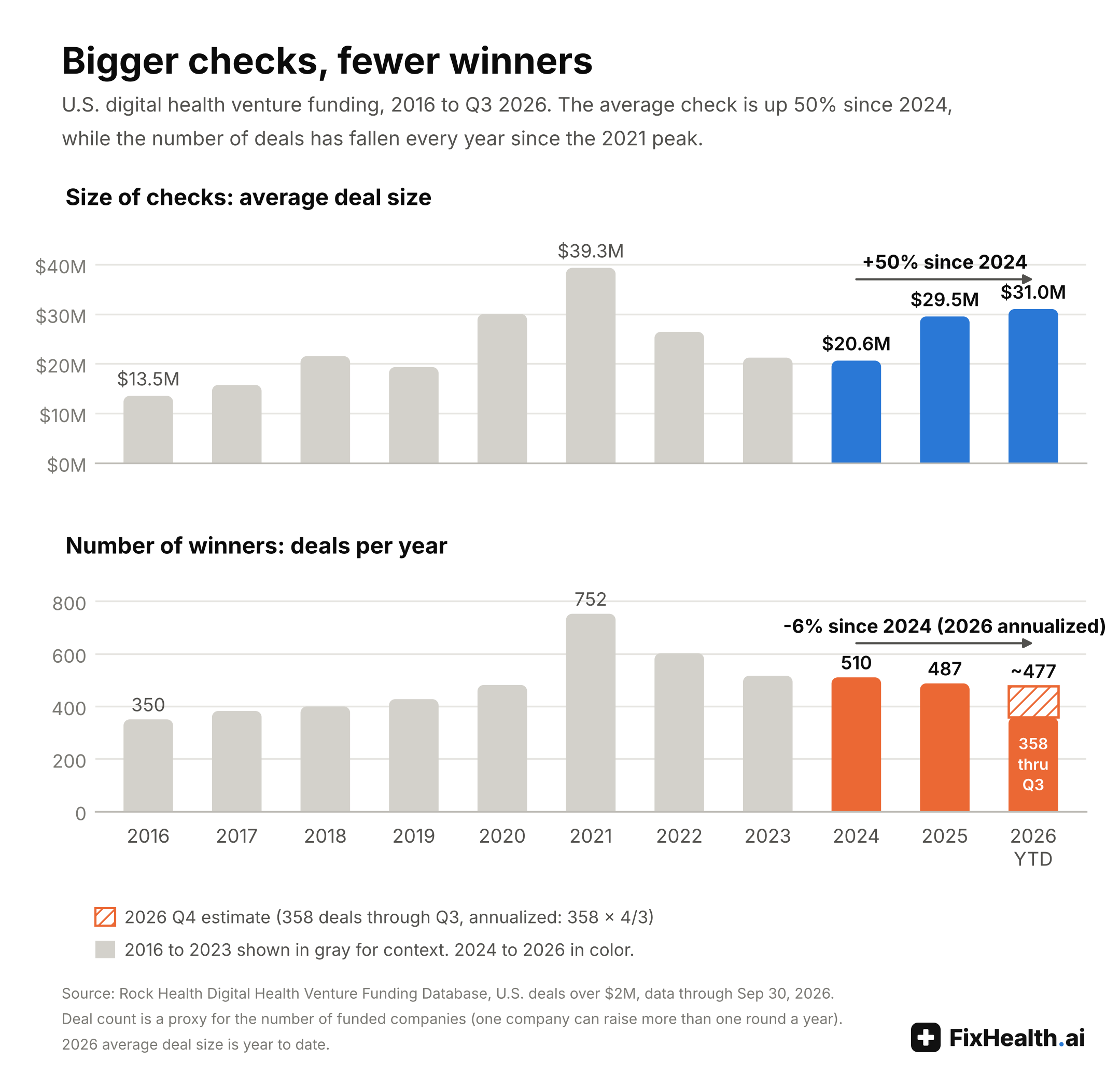
The numbers. US digital health raised $3.7B across 114 deals in Q3 and $11.1B year to date (Rock Health). M&A: 164 deals. IPOs: 0 since August 2025, and Oura pulled its IPO on pricing day.
Bigger checks, fewer winners. The average deal is up 50% since 2024, to $31.0M. The deal count has fallen every year since 2021.
Stephanie: “Picking the winners.” Then my favorite question: “How many dollars have been returned to those investors?” Rock Health counts $140B raised in 15 years, not what came back. In my dataset of ~200 public US healthtech companies, only 32%(!) have earnings.
Malak worries the concentration starves early founders working on moonshots.
Me: I’d rather see money go to innovators than to connections. Not another Babylon, which cost investors $1.5B before Ali Parsa raised again for Quadrivia AI, from some of the same investors! Or another Health IQ: Munjal Shah burned ~$200M there and, reportedly, was already pitching Hippocratic AI before Health IQ even entered bankruptcy court. Instead of funding numbers, show me ROI numbers (The Lost Decade of Venture Capital).
2. “That’s Self-Selection Bias, Sergei”: VC vs. Bootstrapped
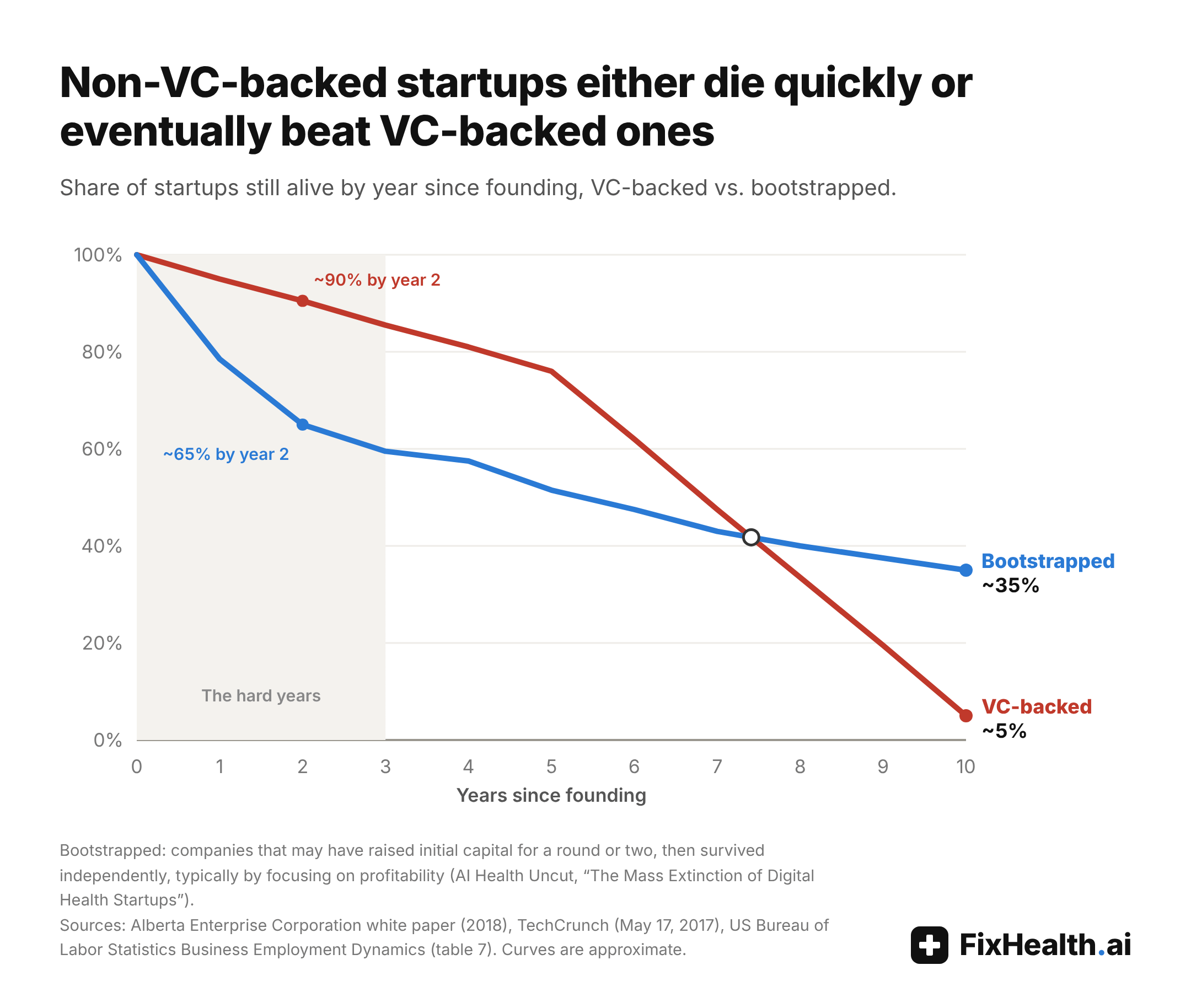
My claim. Healthtech founders who survive the first 2 to 3 years without VC fail less often than VC-backed ones.
Stephanie: “That’s a self-selection bias, Sergei.” She argued that companies that never needed VC funding were somehow less risky to begin with. As she put it, “there wasn’t a big moat of, like, money losing.” No, Stephanie, it’s not simply self-selection bias. Of course, plenty of bootstrapped startups fail because they can’t secure financing. But those that survive don’t necessarily do so because they were inherently less risky or didn’t face a “big moat of money losing.” Quite the opposite. I’d argue that they survive because they’re more competitive, more financially disciplined, and more strategic about allocating scarce resources. And, in many cases, they actually build the kind of competitive moat that allows them to survive over the long term. At virtually any stage of a company’s life, whether it’s year 0, year 1, year 3, or year 10, I’d argue that having access to funding is generally better than not having it, all else being equal. So the fact that these bootstrapped companies managed to build sustainable businesses with far less capital than their VC-backed counterparts is something worth celebrating, not explaining away with convenient theories about why they supposedly had it easier.
Perhaps the real question isn’t why bootstrapped companies managed to survive without VC funding, but why so many VC-backed companies failed despite having it.
Malak sided with founders: VC and founder interests are “completely divergent.” Stephanie flipped it: their incentives “are very aligned.”
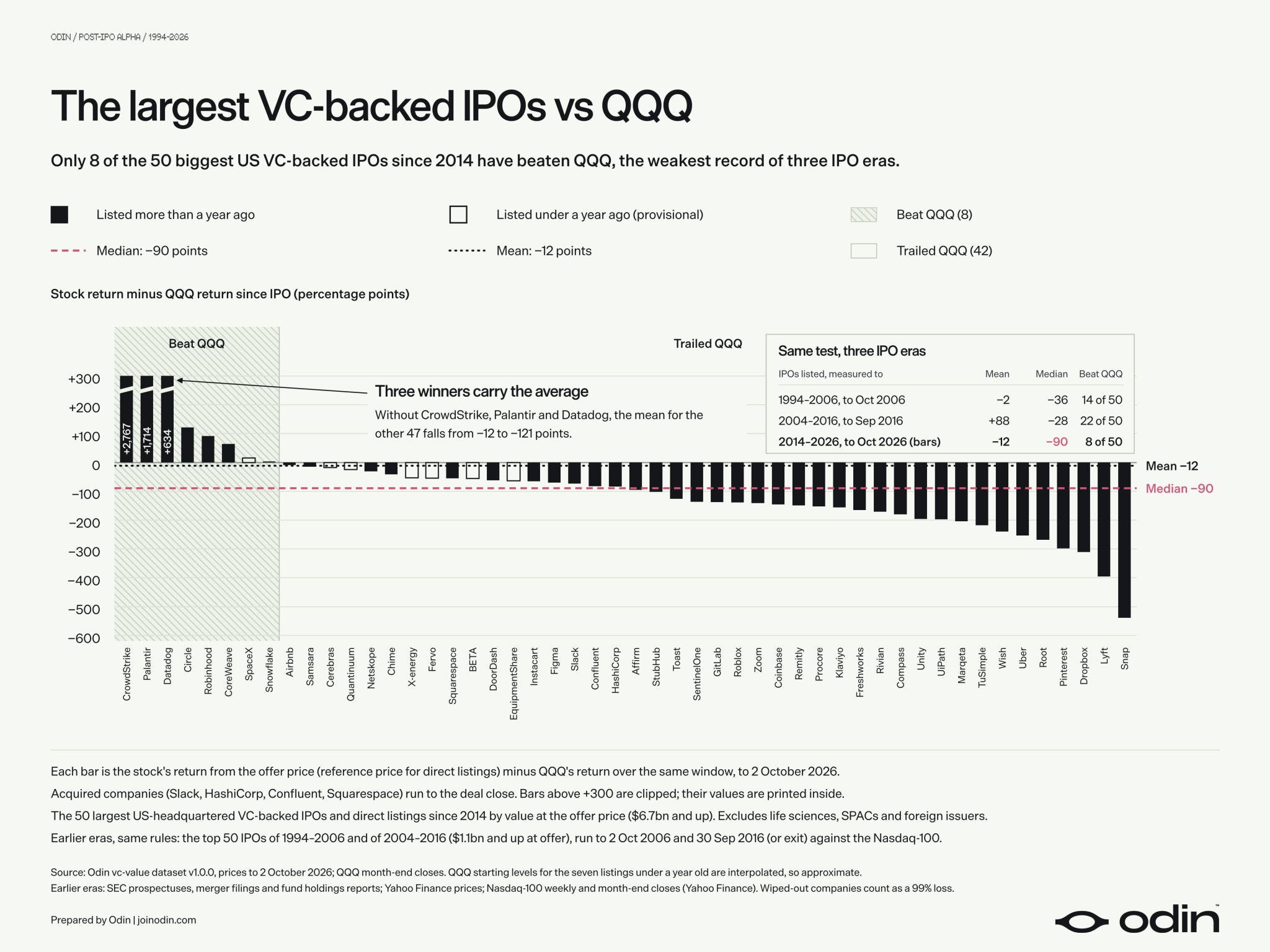
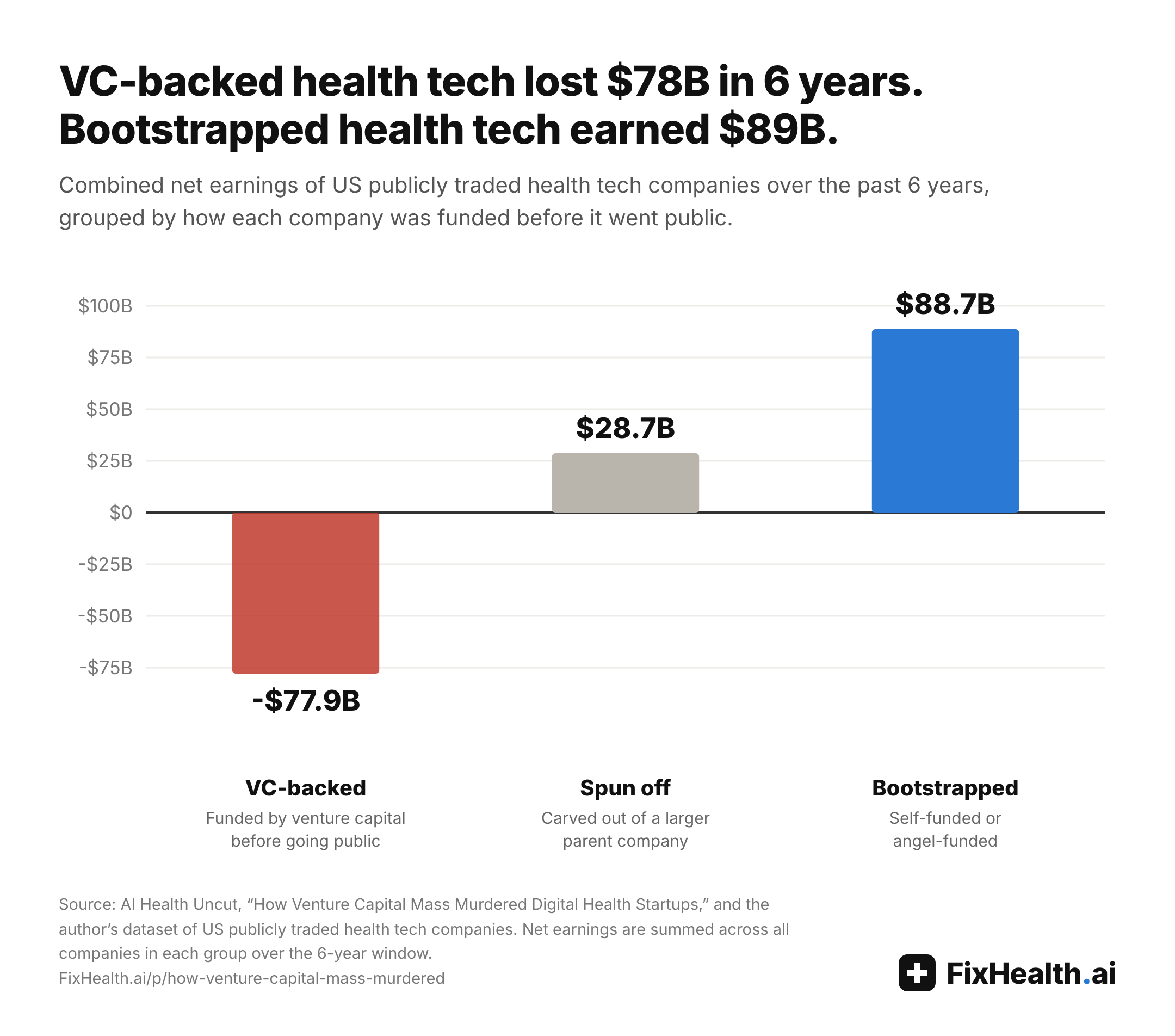
My data. Of 132 US-listed digital health companies over 5 years, VC-backed ones lost ~$70B of earnings, while bootstrapped ones made money or broke even (How Venture Capital Mass Murdered Digital Health Startups). I also cited new research from Odin: only 8 of the 50 biggest US VC-backed IPOs since 2014 have beaten the Nasdaq-100 (QQQ) since listing. 42 of 50, or 84%, trailed it, by a median of 90 points. Stephanie: you can’t champion moonshots and then complain they underperform. “Pick one.”
3. OpenEvidence: $15B Ask, ~$500M Reality
The news. OpenEvidence raised $250M at $15B and “could be open to an M&A deal that includes access to compute” (Business Insider). The $20B round it floated in July never happened.
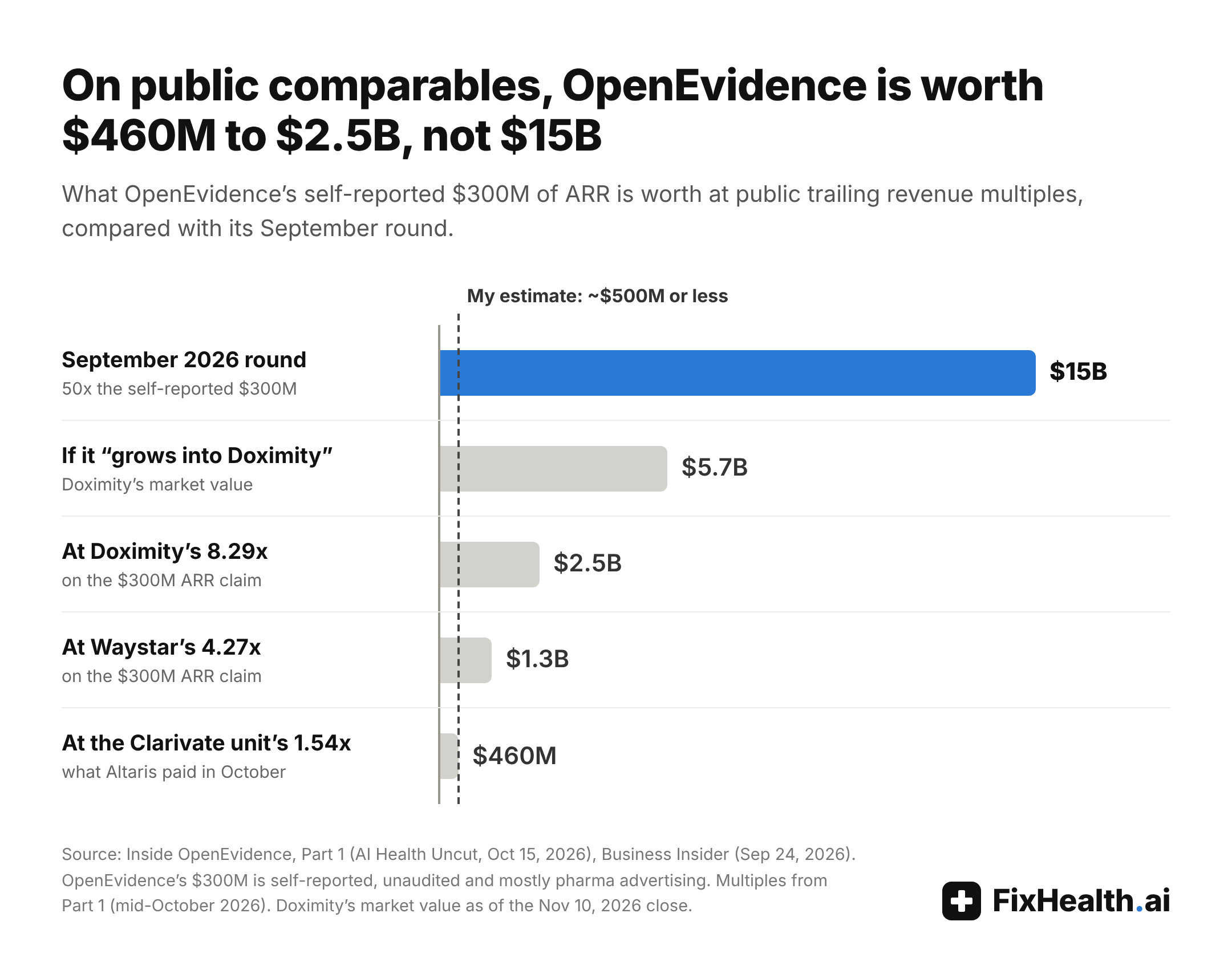
My view. Daniel Nadler is a great salesman, but on any comparable, OpenEvidence is worth ~$500M or less (Inside OpenEvidence, Part 1, Part 2). People familiar with the company describe a hedge fund mindset: buy low, sell high.
Stephanie came for my math. “Half a billion assumes that they are valued at sub one times revenue.” If OpenEvidence grows into Doximity’s scale, it’s “probably not $15B. Definitely not half a billion.” My answer: its ~$300M is self-reported ARR, mostly pharma ads. Doximity’s revenue is audited.
Who buys it? Stephanie on “access to compute”: “So would everyone.” 😂 Me: “Probably some private equity.” Stephanie: “That shows a very poor understanding of what private equity does, Sergei.” Right. 🙄 Stephanie’s pick: a merger with Abridge. Malak’s: a frontier lab.
Livongo is the warning. Teladoc paid $18.5B for it in 2020. As of the Nov 10 close, all of Teladoc was worth $1.591B. Livongo is ~43.4% of Teladoc’s business, which puts it at ~$690M today, ~96% below what Teladoc paid (Livongo Killed Teladoc).
4. Doximity + UpToDate: Is Human-in-the-Loop a Marketing Gimmick?
The news. UpToDate is going inside Doximity Ask, for clinicians at health systems that license both (Fierce).
Stephanie and Malak: doctor-vetted answers matter because “stakes are high,” and clinicians often face cases with no published evidence. Both called Doximity undervalued.
Me: human-in-the-loop sounds sexy, but this sounds like a marketing gimmick to me. In an npj Digital Medicine trial, AI alone got 90% of diagnoses right, doctors with AI 82% to 85%. And PeerCheck has published no data showing it improves Ask (Doximity’s Response to the Nature Medicine Paper).
UpToDate is everywhere now: Epic, Abridge, Suki and Doximity. Same content, no moat. The real threat is ChatGPT inside Epic.
Stephanie’s best line: Big Tech keeps quitting healthcare because “the biggest moat for healthcare technology is that it’s an annoying industry to sell into.”
5. Walmart’s 9th Try: Be the Store, Not the Doctor
The news. Walmart turned Better Care Services into a healthcare store run by General Medicine, the startup of PillPack’s founders: 900+ products and services with insured and cash prices (Fierce).
Malak and Stephanie: this one can work. Walmart doesn’t own the outcome, keeps the pharmacy and OTC spend, and runs it as a store within the store, like optical. Stephanie: “the next big wave of healthcare consumerism.”
Me: attempt number 9 (Walmart Has Failed at Healthcare 8 Times. Now It’s Trying for a 9th.). The irony: Walmart lost PillPack to Amazon in 2018. Now PillPack’s founders run its healthcare aisle. I agree: Of the 8 failures, this may be the best plan.
My question: price transparency, or a paid gatekeeper? General Medicine runs the store and sells its own $30 visits in it, Eli Lilly is on its cap table, and nothing on the page is labeled sponsored.
6. Anthropic’s S-1: Cure Cancer, or Kill Us All
The pitch. The S-1 says AI may help cure “cancer, Alzheimer’s disease, heart disease” (Stephen Turner). Life sciences revenue disclosed: none (GEN).
Stephanie: healthcare is not the S-1’s main story. By her count, healthcare comes up ~20 times, cybersecurity ~40 and financial services “some stupid amount of times.” And she expects Anthropic to get frustrated with how slowly healthcare moves.
Me: there is still no money in AI drug discovery, and no frontier model has cured a cancer. Anthropic sells the shovels.
The same filing warns of “catastrophic or existential risk to humanity” (Yahoo Finance). Stephanie: “Well, we’re not dying of cancer, we’re dying from Anthropic, right?” 😂 And since Anthropic is a public benefit corporation, the 7 co-founders keep 50.1% of the vote (Fortune).
7. Anthropic is Breakeven, Before the $895B Bill Arrives
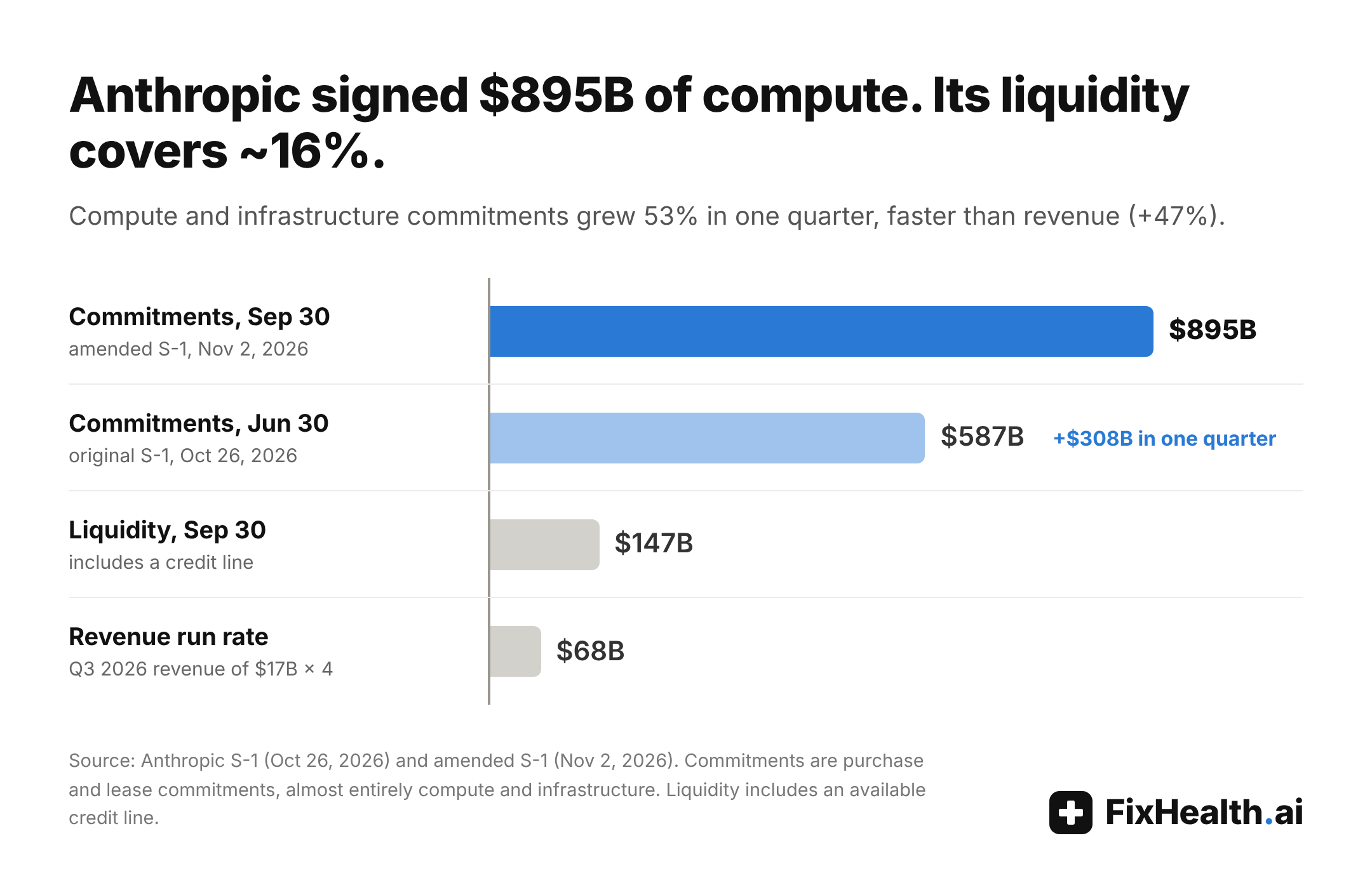
Stephanie: one of the largest cash piles in the world still covers only ~22% of its compute obligations. “There’s a reason they’re going public.”
Me: Anthropic is about breakeven today. Stephanie: “I’m surprised you’re calling it break even when you’re such a stickler on profitability.” Fair question. The numbers are in the S-1. The $80.7B net loss in H1 is mostly accounting: ~$72.4B is a non-cash fair-value charge on convertible notes, all of them Amazon’s, plus ~$8.7B of similar marks. No cash leaves the company, and the charges stop when the notes convert at the IPO. Strip them out and H1 net income is ~+$360M on $16.3B of revenue. GAAP operating income, which already includes training, was -$693M in H1 (-4%) and +$974M in Q2. Operating cash flow was +$3.9B. $360M is roughly breakeven, not deep losses (yet). My caveat: the “85% gross margin” analysts quote leaves out training, $9.74B in H1.
Since we recorded. The amended S-1 (Nov 2): Q3 revenue $17B, up ~47%, after ~144% the quarter before. A $567M operating loss after Q2’s profit. Commitments up from $587B to ~$895B in one quarter.
The bill. Spread $895B over 10 years and it’s ~$90B a year, more than Anthropic’s ~$68B revenue run rate (my rough illustration).
8. I’d Short Anthropic. Stephanie Would Buy It All Day.
Stephanie: “I’d probably be a buyer of this IPO all day. You short it, and we’ll compare notes in 10 years.”
Me: “Well, I wish I could short.” 😂 I’d rather buy something profitable, like Doximity. If the AI bubble pops, none of these numbers hold.
Stephanie: bubbles kill the Pets.com plays, not the core. The frontier labs will still be worth a lot. Me: worth $1T? On Nov 10, Anthropic set its range at $70 to $78 a share: ~$916B to ~$1.02T on shares outstanding, up to ~$1.4T fully diluted (Decrypt), or ~26x to ~40x trailing revenue. Trading is expected Nov 19.
Malak and Alex: the labs are here to stay. For the record, I hold no position. Stephanie, see you in 2036. 😉
9. Bonus: The Thumbs We Ran Out of Time For
We ran out of time for Thumbs 👍🏼, Thumbs 👎🏼. Here are the ones I had ready.
Pathos AI 👎🏼. $237M at ~$3B (Fierce Biotech). AI picks licensed drugs. Phase 2 and 3 are where drugs die.
Suki 👎🏼. $90M (Healthcare Dive). Still my poster child for “AI tourism”.
General Medicine 👍🏼, with an asterisk. $120M (Fierce). The PillPack team, on Walmart’s shelf. The asterisk is section 5.
Oxbridge Health 👎🏼. $45M (Business Wire). A 25% savings promise, no published results.
Catch the full episode on YouTube or Apple Podcasts.
👉🏼 And don’t forget to subscribe. 😉
See you at HLTH next week. Daniel Nadler, the invitation still stands. 😉
Like what you’re reading in this newsletter? Want more in-depth investigations and research? Alright then, go tell your friends!
👉👉👉👉👉 Hi! My name is Sergei Polevikov. I’m an AI researcher and a healthcare AI startup founder. In my newsletter ‘AI Health Uncut,’ I combine my knowledge of AI models with my unique skills in analyzing the financial health of digital health companies. Why “Uncut”? Because I never sugarcoat or filter the hard truth. I don’t play games, I don’t work for anyone, and therefore, with your support, I produce the most original, the most unbiased, the most unapologetic research in AI, innovation, and healthcare. Thank you for your support of my work. You’re part of a vibrant community of healthcare AI enthusiasts! Your engagement matters. 🙏🙏🙏🙏🙏